
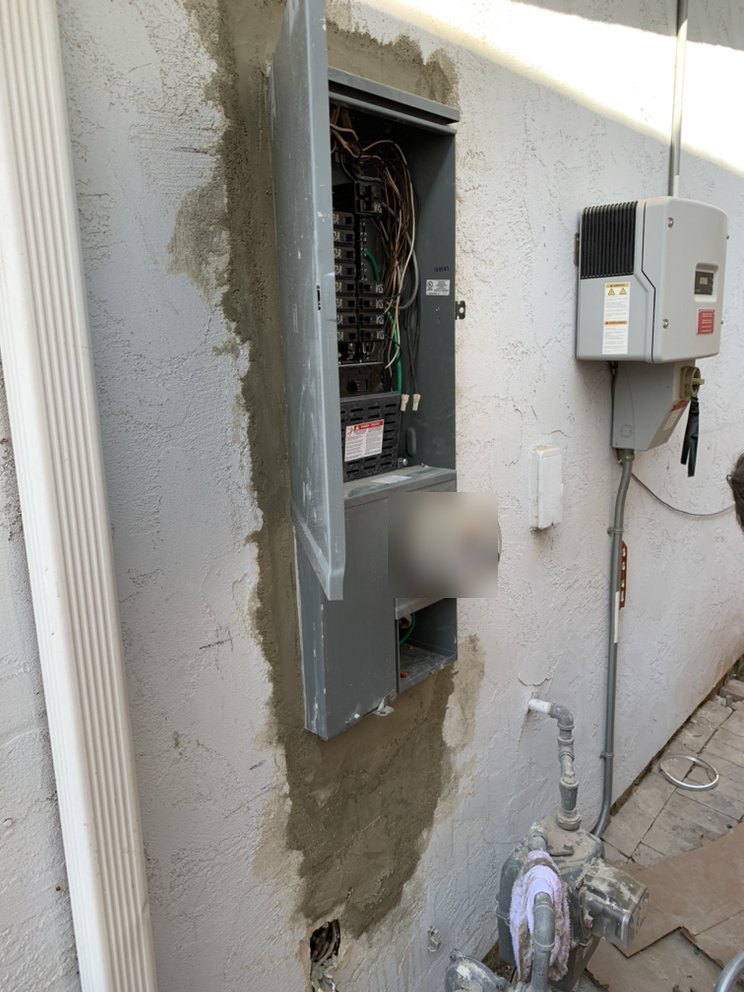
A single flickering bulb is usually the bulb, a loose connection at the lamp, or a dimmer that doesn't suit the bulb. Lights that brighten and dim all over the house, especially when something large turns on, or half the house going dark while the rest still works, can point to a problem with the electrical service itself, so report it to your utility right away and keep away from the meter and panel.
This is for homeowners in Los Angeles, Orange and Ventura counties during wind and shutoff season. If outlets are dead and no breaker has tripped, start with our four checks for dead outlets. If a breaker keeps tripping, read what a tripping breaker usually means.
First, work out how big the problem is
One fixture or one lamp. The cause is usually close by: a bulb that is failing or not fully seated, a loose plug, or an LED bulb on a dimmer it doesn't work well with. Annoying, rarely urgent.
One room or one circuit. If lights on one circuit dip when the microwave, a space heater or the air conditioner starts, that circuit may be shared with a big load. UL Solutions, the safety testing company, says dimming or flickering lights are often caused by major appliances or space heaters on the same circuit and suggests asking an electrician about dedicated lines. LADWP's power quality page gives a similar example: lights flickering when an air conditioner comes on.
The whole house. When every room flickers at once, or lights get noticeably brighter in one part of the house and dimmer in another as large loads cycle on and off, the cause can be upstream of the branch circuits: at the main connections, the service conductors, the meter, or the utility's line to the house. The CPSC links whole-house flicker to bad contacts at the service connection, so treat this one as urgent.
Harmless causes worth ruling out
- New LED bulbs on an old dimmer. The U.S. Department of Energy's 2014 CALiPER testing of retail LED lamps found that LEDs interact with standard dimmers in ways incandescent bulbs don't, that flicker in several lamps got worse at low dim levels, and that buyers should check current information from the bulb's manufacturer. Use bulbs marked dimmable, and check the maker's list of compatible dimmers.
- Smart bulbs and smart switches. If the flicker started when smart bulbs or a smart switch went in, check the manufacturer's instructions for which switches and dimmers the bulbs are meant to work with.
- A brief blink, then everything is normal. Eugene Water and Electric Board, an Oregon utility, explains that a momentary blink of every light can be its system automatically isolating a fault, such as a branch touching a line. A short blink that clears is different from lights that keep pulsing or dimming.
When whole-house flicker is a service problem
The U.S. Consumer Product Safety Commission's Guide to Home Wiring Hazards lists flickering lights, and a TV picture that changes size when the wind blows, as a warning sign of bad contacts where the service entrance cable joins the utility's service drop. Its advice: don't try to correct the problem yourself or touch any of the equipment, and call the power company immediately. For arcing or sparking anywhere in the service equipment, the same guide says the power company or emergency personnel such as firefighters are the only ones authorized to turn off the power in that part of the system.
SCE's electrical safety page says that when you report flickering lights, SCE will inspect its equipment; if it finds no problem on its side, your home's wiring or equipment may be the cause and you may be advised to hire a licensed professional.
Who to call:
- SCE customers: report it through SCE's outage and safety reporting page. SCE says to call 911 for an electrical emergency such as a downed power line.
- LADWP customers: LADWP's power outage page says to report outages to its Customer Contact Center, and its electric safety page lists the same contact center for downed lines and says to call 911 if anyone is in danger.
- Other utilities: if another utility serves you, such as the city-owned utilities in Burbank, Glendale, Pasadena and Anaheim, use that utility's reporting line.
Half the house dark after the power comes back
Sometimes the power returns after an outage, a shutoff or a storm, and only part of the house works, or the dryer, range or air conditioner won't run while some lights do.
Check the panel's breakers first, looking only at the handles behind the panel door. SCE's outage tips say that when only some rooms are out, resetting the breaker can restore power: turn off lights and unplug appliances in the dark rooms, then switch the tripped breaker fully off and back on. SCE adds to call an electrician if it keeps tripping.
If no breaker is tripped and part of the house is still out, the fault may be on the utility's side, so call the utility before anyone else. Eugene Water and Electric Board, an Oregon utility, gives the same order: check for a tripped breaker, then call the utility to report partial power.
Don't run large appliances while the power is partial, and don't keep switching things on to test them.
Your side and the utility's side
For SCE customers with an overhead service, SCE's Rule 16 says SCE owns and maintains the overhead service conductors to the Service Delivery Point and the SCE-owned meter, while the customer furnishes, owns and maintains the service entrance conductors that run to the meter and the meter socket. Everything after the meter, from the main breaker and panel to the branch circuits, is part of the home's own wiring.
LADWP sets its own service rules. If you're an LADWP customer and aren't sure where its equipment ends at your address, ask LADWP when you report the problem.
One more customer-side item: older homes with aluminum branch wiring. The CPSC guide says aluminum wires connected to outlets and switches tend to loosen with use, lose good contact and overheat, and that a qualified electrician should determine a reliable repair.
Stop and get help now if you notice any of these
- A burning or hot-plastic smell from the panel, the meter or an outlet
- A panel door, outlet or switch cover that feels hot or looks discolored
- Buzzing, sizzling or crackling from the panel or meter
- Sparks or arcing at the meter, the service wires or the panel
- Smoke, or flames
The Electrical Safety Foundation's page on home electrical fires lists dim and flickering lights and unusual sizzling and buzzing sounds as warning signs, and says to contact a qualified electrician immediately.
If there is smoke or fire, get everyone out and call 911; SCE says to call 911 for an electrical fire and never to throw water on one. Don't go to the panel or meter if you smell burning, if it is hot, buzzing, sparking or smoking, if anything is wet, or if you aren't sure. For sparking at the meter or service wires, call the utility. If a single outlet smells odd, UL Solutions advises turning off and unplugging what's connected and not using it until a qualified electrician has checked it.
Never remove the panel cover, tighten connections or touch anything inside the panel or meter socket; the CPSC guide says not to remove the service-panel cover.
After a shutoff: bring things back slowly
When the power returns, turn things back on a few at a time; our checklist for power shutoffs covers what to unplug and how to restart. Cal OES also advises looking for signs of damage such as frayed wires, sparks or burnt outlets.
If the lights flicker or dim as you bring things back one by one, stop and report it.
What an electrician checks
Once the utility has checked its side, the next step is a licensed electrician. For whole-house flicker, that usually means checking:
- The main panel's connections, including the main lugs and the main breaker, for looseness, heat damage or corrosion
- The service entrance conductors between the meter and the panel
- The grounding and bonding, from the panel to the grounding electrode
- The meter socket, which SCE's Rule 16 places on the customer's side; when the meter has to come out, that step is coordinated with the utility
- Branch circuits, if the flicker turns out to be limited to one part of the house
Infinity Electrical Inc. (CSLB #1100231) does this troubleshooting for homes and businesses across Los Angeles, Orange and Ventura counties. Our troubleshooting and repair page explains how we track down faults. If the inspection shows a damaged or worn-out panel or meter socket, our panel upgrade page covers the replacement, with the utility steps coordinated as part of the job.
FAQ
Is it dangerous if all the lights in my house flicker?
It can be. Whole-house flicker, especially when lights brighten and dim as big appliances turn on, can mean a loose connection at the service, so report it to your utility right away and don't touch the meter or panel.
Why is half my house without power after an outage?
A tripped breaker or a fault on the utility's side are the first things to rule out. Check the breaker handles behind the panel door, and if none is tripped, call your utility to report partial power.
Can LED bulbs cause flickering?
Yes. LED bulbs on a dimmer they aren't compatible with can flicker, especially at low settings, so use bulbs marked dimmable and check the bulb maker's list of compatible dimmers.
Who fixes flickering lights, the utility or an electrician?
Both, depending on where the problem is. The utility inspects and repairs its own equipment, such as the service drop and meter; the wiring, meter socket and panel on your property are usually yours to have repaired by a licensed electrician.
Should I turn off the main breaker if I smell burning at the panel?
No, don't go to the panel to do it. A burning smell at the panel can mean parts are overheating, so get everyone out and call 911; the fire department and the utility can shut off power safely, and you should also call the utility for sparking at the meter or service wires.
Get it checked
Send a description of what the lights are doing, and if it's safe to approach them, photos of your panel and meter taken from a safe distance with only the hinged panel door open, through the estimate form, or call (844) 430-7681. Free estimates on eligible work.
Need urgent electrical assistance? Call Infinity Electrical to check technician availability.