Three ways to back up a house
- A portable generator and an inlet. A weatherproof inlet outside, wired to a transfer switch or to an interlock listed for your panel. In an outage you run the generator outdoors, away from windows, doors and vents (never indoors or in a garage), plug it into the inlet and switch over the circuits it can carry. Often the simplest setup.
- A permanently installed standby generator. Set outside and connected through an automatic transfer switch: when the grid drops, the generator starts and the switch moves the house over to it. We do the electrical side: the transfer switch, the wiring to your panel and the circuits it carries. Its fuel supply is separate work.
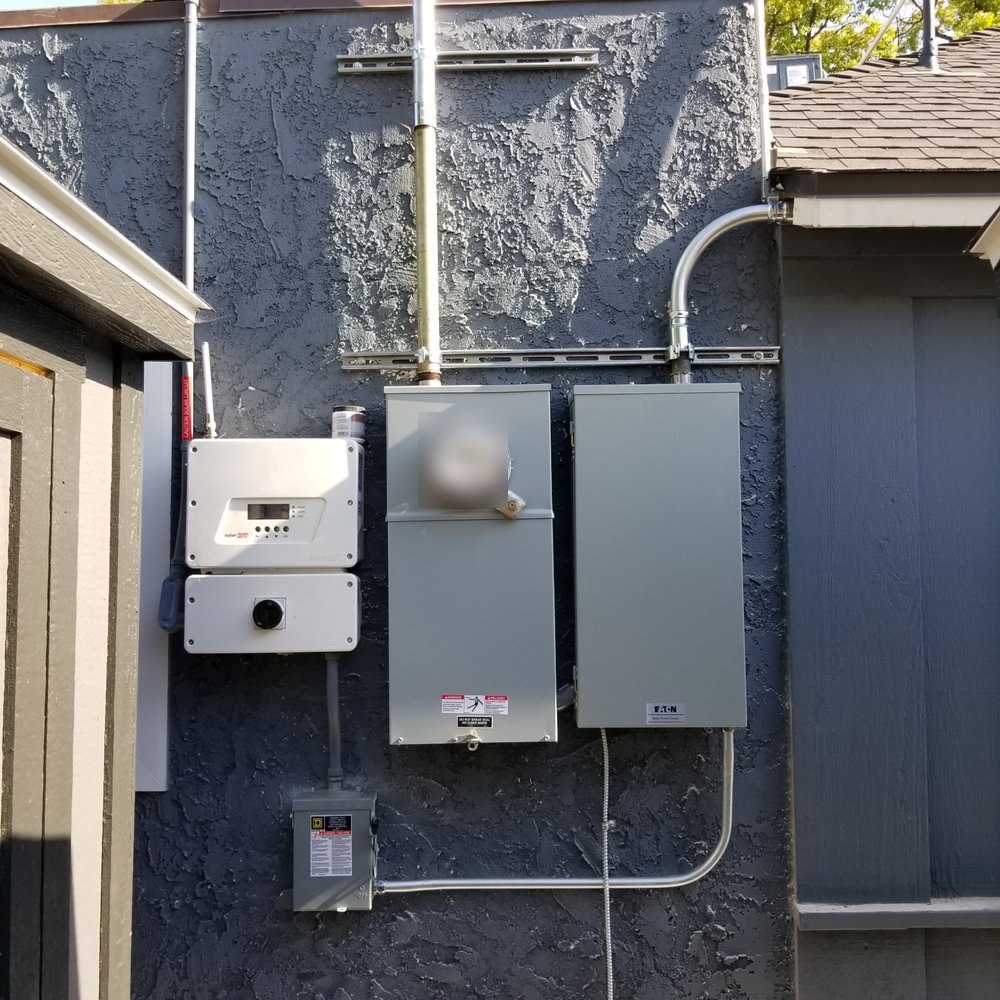
- A battery system. A battery, with or without solar, wired to back up the whole house or a sub-panel of the circuits you choose. It switches over without starting an engine and runs silently, but it stores a fixed amount of energy.
Never through an outlet
A generator plugged into a wall or dryer outlet, or wired straight into the panel, can push power back out through your service onto the utility's lines. SCE calls this backfeed and warns that it can electrocute you, your neighbors or the crews working on the lines. California law requires a generator connected to a building's wiring to go through a double-throw switch that isolates the house from the grid. A transfer switch, or an interlock listed for your panel, does exactly that: only one source can feed the panel at a time.
What we install
- Generator inlet boxes matched to your generator's outlet and output.
- Manual transfer switches, and interlock kits listed for your panel.
- Automatic transfer switches for standby generators.
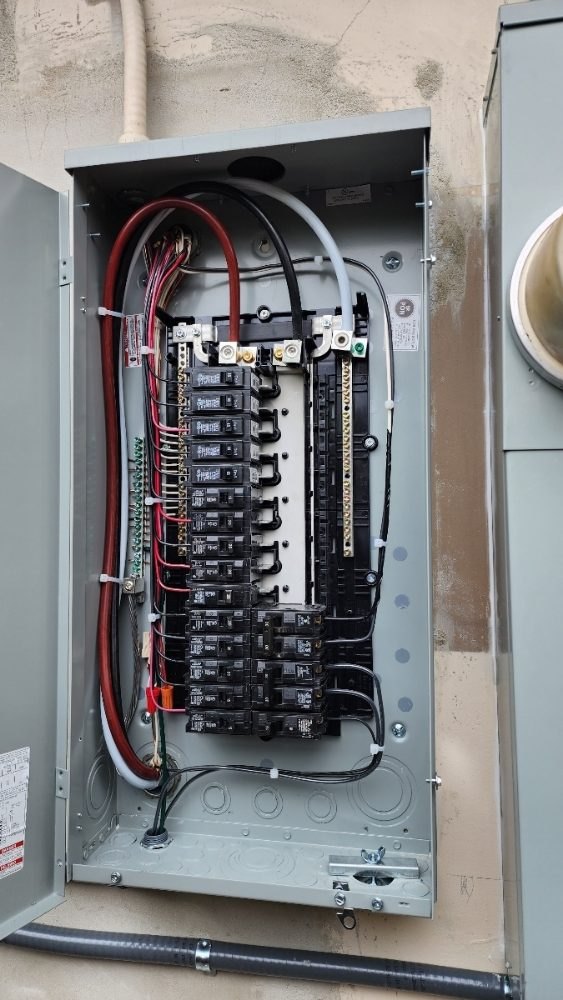
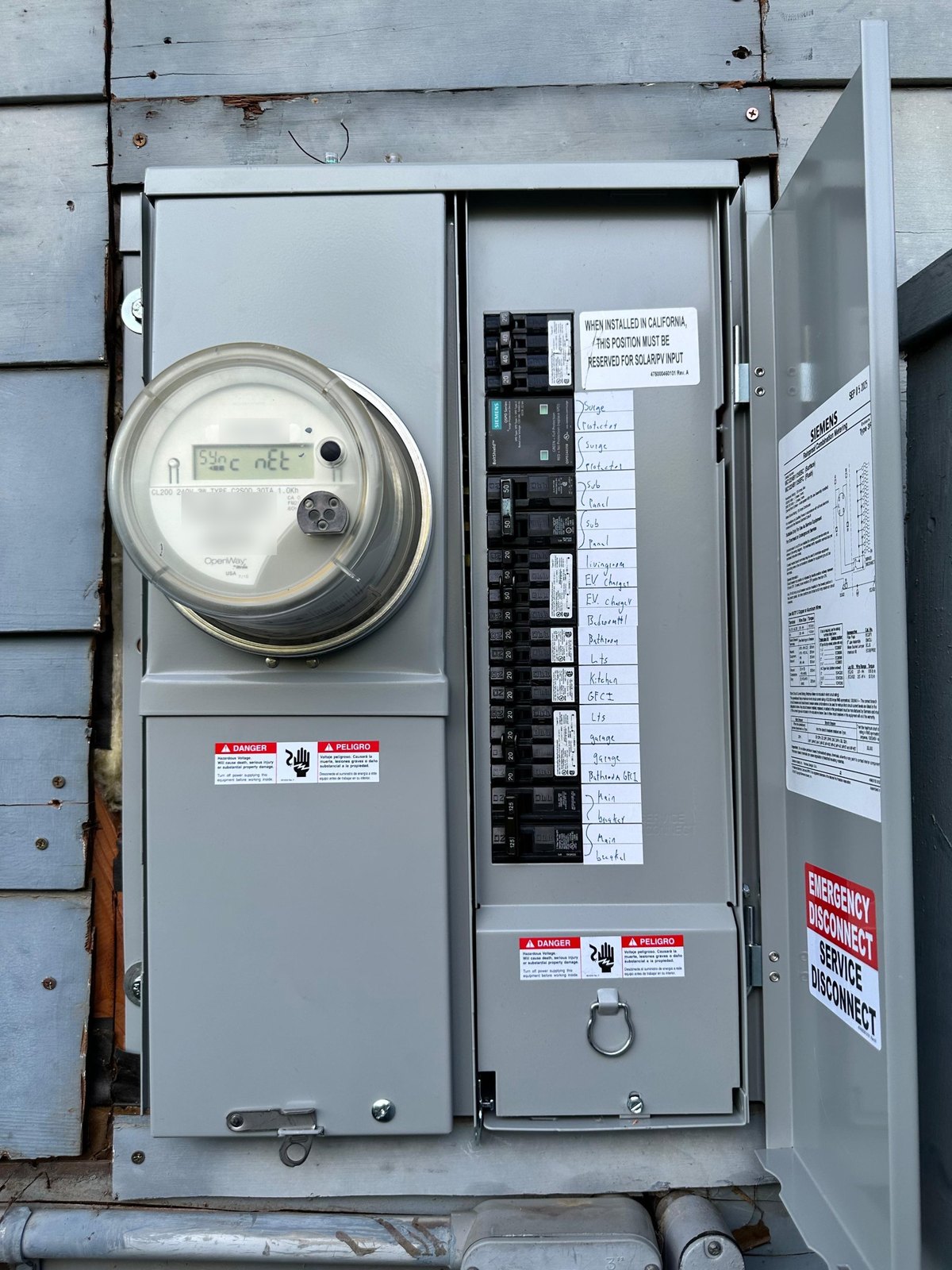
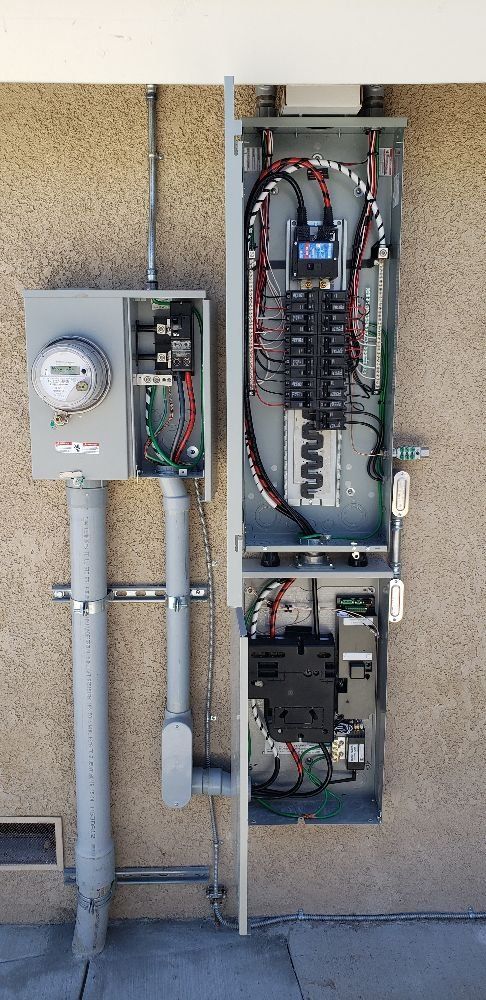
- Critical-loads sub-panels, so a generator or battery carries only the circuits you choose.
- Battery backup wiring: the connection to your panel and the circuits it keeps running, with a panel upgrade when the existing one can't take the system.
- A load calculation, so the transfer equipment, the generator or the battery matches what you want to run.
Choosing what to keep running
Start with a list: the refrigerator and freezer, some lights, the internet router, phone and laptop charging, the garage door, perhaps the blower on a gas furnace or a well pump. Add up their running watts and the biggest starting surge, because motors draw several times their running power for a moment as they start; the generator or battery has to cover both.
Central air conditioning, electric ranges, dryers and EV chargers are the big loads. Many backup setups leave them off, or let only one run at a time. We walk the house with you, list the circuits, and size the transfer switch or sub-panel to the generator you have or the battery you're choosing.
The utility's part
- Southern California Edison. SCE says state law requires you to notify it before a generator is permanently wired to your home; residential customers call 1-800-655-4555.
- LADWP. Customer-owned emergency or standby generator installations are reviewed and approved by LADWP's engineers. The request includes a one-line diagram, a service planning form and the transfer switch's specification sheet.
- Batteries. A battery that connects to the grid, usually alongside solar, goes through the utility's interconnection process, and the system isn't switched on until the utility gives permission to operate.
- City-run utilities. Burbank, Glendale, Pasadena and the other city utilities in our area set their own rules, so we check with yours before the work starts.
These connections are permitted, inspected work. We file the permit and meet the inspector.
Where shutoffs come up most
Southern California Edison can switch off power to circuits in high fire-risk areas during dangerous wind. In our service area it has shut off power, or warned customers it might, in foothill and canyon communities such as Santa Clarita, Simi Valley, Thousand Oaks, Agoura Hills, Calabasas. Our local pages for those cities cover what the shutoffs mean there.
Local guides: Woodland Hills, West Hills, Porter Ranch, Encino, Northridge, Sherman Oaks, Calabasas, Burbank, Reseda, Tarzana, Canoga Park, Chatsworth, Granada Hills, Van Nuys, North Hollywood, Studio City, Glendale, Sun Valley, Pasadena, Santa Clarita, Simi Valley, Thousand Oaks, Agoura Hills, Sylmar. All areas