
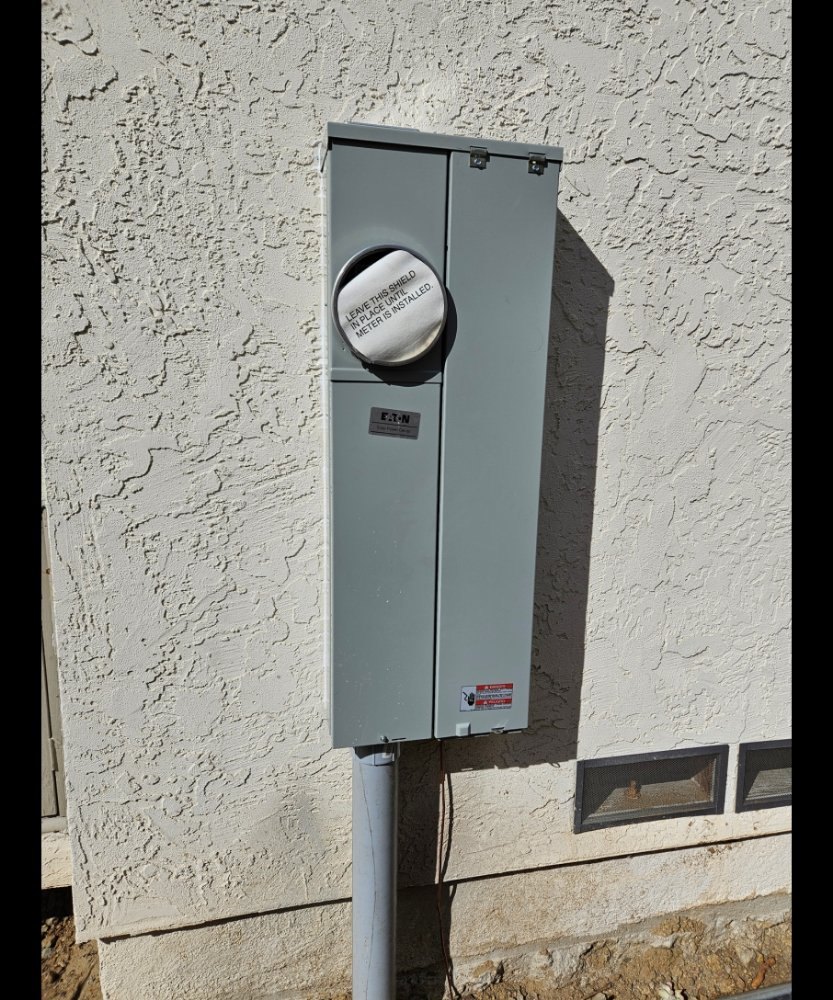
To move the wires that run from the pole to your house underground, the property owner's side digs the trench, installs the conduit and changes the panel or meter equipment so it can take an underground feed, and the utility then installs and connects the new cable and typically removes the overhead line. Each utility has its own rules for that split, so the first step is a request to your utility's service planning office, not a shovel.
This guide is for homeowners in Los Angeles, Orange and Ventura counties who want the overhead "service drop" off their roof or out of the yard: during a remodel or panel upgrade, to clear a tree-filled path, or because the line is in the way of a second story or an addition. It covers Southern California Edison (SCE), the Los Angeles Department of Water and Power (LADWP) and Anaheim Public Utilities, which publish the clearest rules. If you're rebuilding in Pacific Palisades, LADWP has a separate, specific process; see our Palisades underground-ready guide.
Who does what on an underground conversion?
The split is similar across the three utilities, but the wording, fees and inspections are each utility's own.
- SCE. SCE's Rule 16, the tariff rule for service connections, says that where overhead services are replaced by underground services for the customer's convenience, the customer performs all excavation, furnishes and installs the conduits and other "substructures", and pays SCE its estimated installed cost to complete the new service and remove the overhead facilities. Under the same rule, SCE furnishes the service conductors, and only personnel authorized by SCE may connect or disconnect them. You can read it in SCE's Rule 16.
- LADWP. LADWP's electric services FAQ on underground service says to contact the Electric Service Representative (ESR) for your address to check feasibility, that a contractor is responsible for installing conduit on private property, and that there are usually fees if LADWP must install underground conduit in public property. Its Electric Service Requirements manual says LADWP installs the cables, and that service is not energized until the service and metering equipment and conduit have been inspected and approved by LADWP.
- Anaheim Public Utilities. Anaheim's new, upgrade and relocation page is written for owners who want to underground their overhead lines and are willing to install the plastic conduits. It asks you to call the utility inspector at least two business days before filling in the trench, so the trench and conduits can be checked, and says you may be eligible for a rebate through the city's Home Undergrounding Program (HUG). The city's HUG FAQ says homeowners dig the trench and install the conduits, and that Anaheim Public Utilities provides the electrical materials and labor for its part at no cost. Ask the utility whether the program is open before you plan around it.
If your home is served by Burbank, Glendale, Pasadena or another city utility, the idea is the same, but the details, inspection steps and any program are theirs; start with that utility's service planning or engineering office.
The order a conversion usually happens in
- Ask the utility first. In SCE territory, contact SCE's Service Planning office; with LADWP, the ESR for your address; in Anaheim, Anaheim Public Utilities. They decide where the new service can come from (the pole, a pull box or an underground line), the route, the conduit size and depth, and their part of the cost. LADWP's FAQ says its Service Planning Engineer can take six to eight weeks to work out exact installation costs, so start early.
- Plan the panel, meter and permit. The equipment on your house has to accept an underground feed. A Los Angeles County guide for homes in SCE's targeted undergrounding areas, Preparing for SCE Targeted Undergrounding, says the conduit must end in the service panel's pull section, with pull string. Panels built only for an overhead feed often lack an underground pull section, so a conversion often goes together with a panel or meter upgrade. The county guide also says a general electrical permit is required for the panel and conduit installation; in the City of Los Angeles, LADWP's FAQ notes that LADBS requires an electrical permit before an inspector can go to the jobsite. Permit and utility steps are coordinated as part of the job.
- Locate buried lines, then dig. The California Public Utilities Commission's 8-1-1 safety fact sheet says everyone, including do-it-yourself homeowners, should call 8-1-1 at least two working days before digging, so underground utility lines can be marked first. That applies whether a contractor or the homeowner digs the trench.
- Install conduit, then inspection before the trench is covered. The county guide says the conduit must be inspected by the building inspector before burial, and utilities inspect their part too (Anaheim before you fill the trench; LADWP lists inspection lead times in its manual). Don't backfill until both have signed off.
- The utility pulls and connects the cable. After the city or county has inspected the customer-owned work, the utility installs its cable, makes the final connection and typically removes the overhead drop. Expect a short planned outage; the utility schedules it.
What makes a conversion simple or difficult?
- Distance and route. A short run across a lawn is a different job from a long run under a driveway, a patio or mature trees. The utility's planner sets the route; the depth and conduit size come from its requirements, not from a rule of thumb.
- Where the new service comes from. If the nearest pole or pull box is across the street or the line has to cross public property, the utility may need its own work there, with its own fees and schedule.
- The existing panel. An older panel with no pull section, or a service that's already undersized, usually turns the conversion into a panel upgrade, which is often the right time to do both.
- Other utilities on the same pole. Phone and cable lines on the pole are separate services with their own companies. Moving the power line doesn't move them.
Will going underground keep my power on during a shutoff?
Not by itself. An underground service changes only the line between the utility's system and your house. If the utility turns off the circuit that feeds your street during a Public Safety Power Shutoff or a repair, a home with an underground service loses power with everyone else on that circuit. A neighborhood-wide project moves more of the line underground, but whether that changes shutoff exposure depends on the whole circuit, so ask your utility. Under the CPUC's Rule 20 undergrounding programs, utilities and cities move whole lines underground, and SCE's Rule 20 page explains that under Rule 20C the applicant pays the full cost, less a credit for the salvage value of the removed equipment. For keeping essentials running during an outage, see our backup power page.
If your whole street is being undergrounded
When a utility undergrounds a neighborhood under Rule 20A, homes still need their own service converted. SCE's Rule 20 guidebook says the city or county may choose to use Rule 20A work credits to convert panels to accept underground service, but changes needed to clear code violations are the owner's responsibility; and where the project doesn't include the service laterals (it can cover up to 100 feet of each), the owner is responsible for the trench and the service conduit. Read the notice your utility or city sends; it will say what the project covers on your property and the deadline for your part.
How we can help
Infinity Electrical Inc. (CSLB C-10 #1100231) does overhead-to-underground service conversions for homes in Los Angeles, Orange and Ventura counties: the conduit, the pull box and riser where the utility calls for them, and the panel or meter change to accept the underground feed, built to the utility's specifications and inspected before it's covered, with the utility making the final connection. Free estimates on eligible work; call (844) 430-7681 or use the estimate form. Customer assistance in English and Spanish.
FAQ
Who pays to move my power line underground?
On SCE's system, the customer who asks for the conversion does: SCE's Rule 16 says the customer performs the excavation and conduit work and pays SCE its estimated cost for the new service and removal of the overhead line. LADWP and Anaheim set their own charges and programs, so ask your utility for its figure before you plan.
Can I dig the trench myself?
Some utilities allow the owner's side to be done by the owner, but the trench and conduit still have to meet the utility's specifications and pass inspection before burial, and you should call 8-1-1 at least two working days before digging. Leave the panel, the meter and the point where the conduit enters the service equipment to a licensed electrician: that equipment stays energized until the utility's cutover, and the utility makes the final connection.
Do I need a new panel to go underground?
Often, yes. The conduit has to end in a pull section on the service equipment, and panels built only for an overhead feed often lack one. An electrician can tell you after looking at your existing equipment and the utility's requirements.
How long does an underground conversion take?
Most of the time goes to the utility's planning and scheduling, not the digging. LADWP says its Service Planning Engineer can take six to eight weeks to determine exact installation costs; the utility then schedules its own cable work and final connection after the inspections.
Will the phone and cable lines go underground too?
Not automatically. Those lines belong to other companies, and each has its own process for moving its service.