
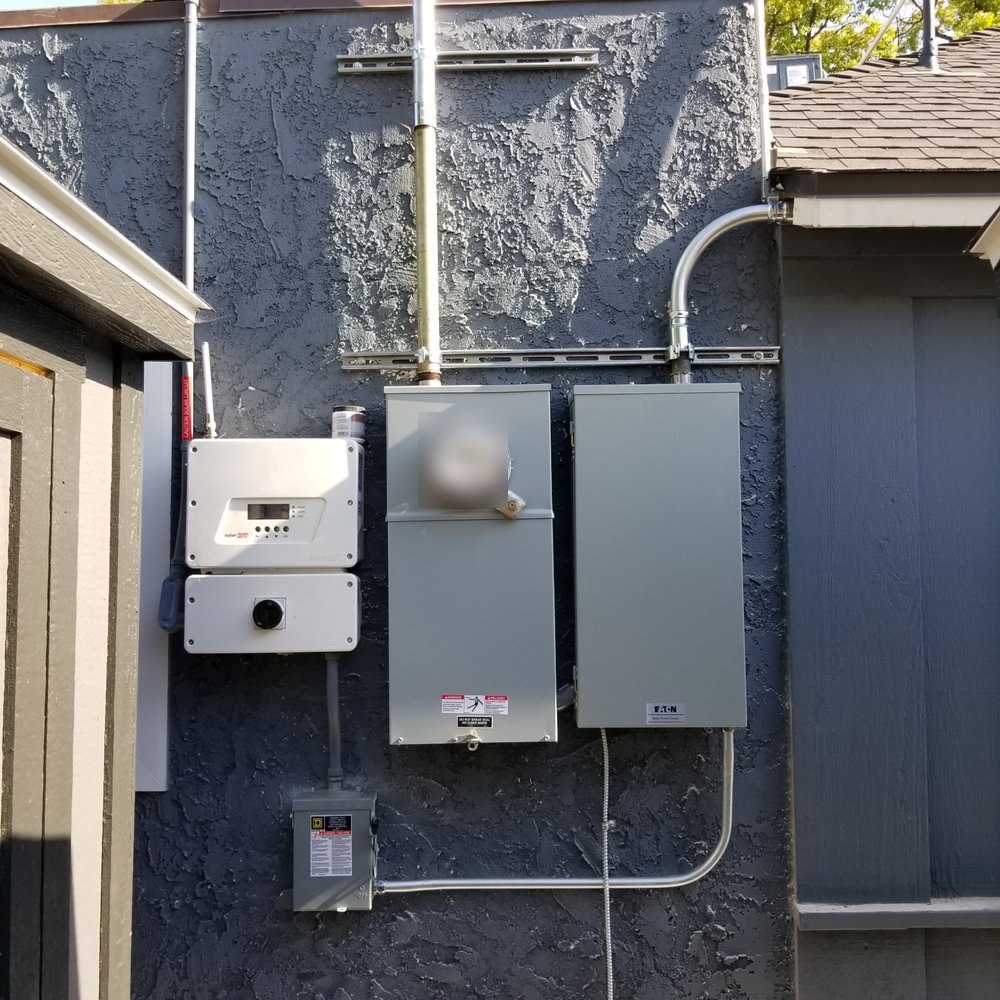
Usually not. Most grid-tied solar systems switch off when the grid goes down, so the house goes dark along with the neighborhood even on a sunny day. To keep power on in an outage you need either a battery system set up for backup or a generator connected through a transfer switch or an approved interlock.
That matters most in foothill and canyon neighborhoods, where Southern California Edison may shut off power ahead of dangerous fire weather. Here is why, and what a backup setup involves.
Why solar shuts off when the grid does
SCE's solar technology FAQ puts it plainly: a grid-tied solar system does not provide power during outages unless it includes a battery storage system, and it shuts down immediately for safety. The U.S. Department of Energy's solar and resilience basics says the same: rooftop systems are designed to switch off when grid power cuts out.
The safety reason is the people fixing the lines. If your inverter kept pushing power out while the grid was down, it could energize wires that crews expect to be dead. The National Renewable Energy Laboratory notes that this kind of unintended power "island" can endanger utility workers during restoration, and the national interconnection standard for equipment like solar inverters, IEEE 1547, requires it to detect the situation and stop feeding the grid within seconds.
What a backup-capable battery setup involves
A battery alone isn't enough. The Department of Energy describes what's needed as a properly configured inverter plus storage that switches to "islanded" mode when it senses the grid is gone. In practice that means:
An automatic disconnect from the grid. Backup systems include a device that automatically separates the house from the utility when the grid goes down; its name varies by manufacturer. Only then can the battery, and solar if it is set up for backup, run the house without feeding the street.
Which circuits are backed up. There are two common layouts:
- Critical loads, or a backup sub-panel. The circuits you choose, such as the refrigerator, some lights and outlets, the internet router, the garage door or a gas furnace blower, move to a separate panel the battery carries. The rest of the house goes dark in an outage. This stretches a battery's stored energy further.
- Whole home. The backup equipment typically sits between the utility meter and your main panel, so every circuit stays connected. Big loads like central air, an electric range, a dryer or an EV charger can drain a battery quickly or exceed what it can deliver at once, so whole-home setups often limit or manage them.
Panel capacity. A battery, like solar, connects to your electrical panel, and the panel and its busbar have limits on how much power sources can feed it. Some homes need a panel upgrade or a different connection point before a battery can be added. The electrical code, the panel's ratings and the equipment's installation instructions decide that, and a load calculation shows what the house actually draws.
Utility paperwork. A battery tied to the grid goes through the utility's interconnection process. SCE's Solar Billing Plan FAQ says adding storage to an existing solar system still requires a revised application, says you or your contractor submit it, and advises not to run added equipment until SCE issues a new permission to operate. A larger addition can also change which billing plan applies.
The generator option
A generator runs as long as it has fuel, with or without solar, but it is louder and needs care.
- Connect it through a transfer switch or an approved interlock. SCE's generator safety page says not to connect a portable generator to your home's wiring or panel on your own, and to have a licensed electrician install a transfer switch. A transfer switch, or an interlock listed for your panel, lets only one source feed the house at a time. Usually a weatherproof inlet outside takes the generator's cord.
- Never backfeed. Plugging a generator into a wall or dryer outlet, or wiring it straight into the panel, can send power back out onto the utility's lines, which SCE calls extremely dangerous for you, your neighbors and line crews.
- Tell SCE first. SCE says California law requires you to notify it before a generator is permanently connected to your home.
- Outdoors only. Generators make carbon monoxide. The Consumer Product Safety Commission's portable generator safety alert says never to run one inside a home, garage, basement, crawlspace or shed, even with doors open, to keep it at least 20 feet from doors, windows and vents, and to install carbon monoxide alarms.
We don't sell generators. We connect the one you own or plan to buy, and our generator and battery backup page explains the options and the utility steps for SCE and LADWP customers.
Who does what: your solar company and your electrician
Your solar company is responsible for the solar system itself: the panels, the inverter and its warranty. Ask them:
- Can my existing inverter support a battery, and is it set up for backup?
- Will adding a battery or changing the wiring affect my solar warranty or my billing plan?
- Who will submit the revised interconnection application to the utility?
An electrician's part is the house side: the load calculation, the backup sub-panel or whole-home connection, the battery's connection to your panel, a panel upgrade when the existing one can't take it, and generator inlets, transfer switches and interlocks. Infinity Electrical Inc. (CSLB #1100231) does that electrical work. We don't install, sell or repair solar panels or inverters; when a project touches the solar system, the steps are coordinated with your solar contractor.
Know before the power goes out
SCE says it begins sending Public Safety Power Shutoff notifications up to three days in advance, with updates as the shutoff gets closer. Account holders set their contact preferences in My Account, and anyone can sign up for address-level alerts on SCE's PSPS page.
If LADWP or another city utility serves your address, these SCE alerts don't apply to you. LADWP customers can sign up for outage alerts by text or email through their LADWP account.
When a shutoff notice arrives, check that a backup battery is charged and that a generator has fuel and has been test-run, outdoors, before the power goes off.
FAQ
Will my solar panels work during a Public Safety Power Shutoff?
Not on their own. A grid-tied system shuts off when the utility's power is off, whether the cause is a storm, an equipment failure or a planned shutoff; it keeps the house running only with a battery and equipment set up for backup.
Can I add a battery to the solar system I already have?
Often yes, but it depends on your inverter, your panel and your utility. Your solar company can tell you whether the inverter supports a battery, an electrician checks whether the panel can take it, and the utility needs a revised application before the added equipment runs.
Can a generator and solar work together?
Yes, if it's set up correctly: the generator connects through a transfer switch or an approved interlock that keeps the house isolated from the grid. Solar inverters and batteries don't all handle generator power the same way, so ask your solar company how your system should be connected before you buy a generator.
Does a battery back up my whole house?
Only if the system is designed for whole-home backup. Many carry a backup sub-panel of chosen circuits, and whole-home systems often limit large loads like central air or EV charging.
Planning backup power
If you're weighing a battery or a generator hookup, tell us what you want to keep running, what panel you have and what solar equipment is on the house. Send photos with the estimate form or call (844) 430-7681. Free estimates on eligible work, and the price comes in writing before any work starts.