
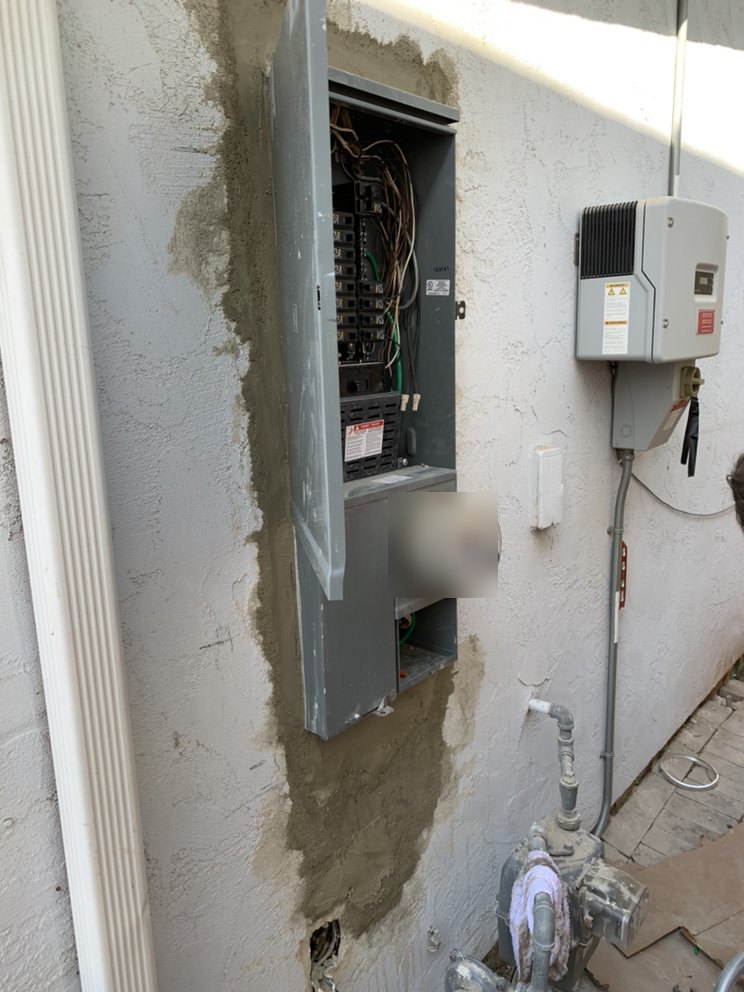
An electrical note on a home inspection report means the inspector saw something that deserves a closer look. Some notes describe conditions that can start a fire or give someone a shock, and those should be evaluated right away. Others describe an older house built to older rules. This guide explains the findings that come up most often, how electricians usually prioritize them, and how buyers, sellers, agents and inspectors can turn the report into a clear plan.
A home inspection is a visual check. "Recommend evaluation by a licensed electrician" means the inspector saw a concern and is handing it to the trade that can test circuits, open devices and confirm what's behind them.
How to read the groups below. They show how these findings are usually prioritized. They are not a safety rating for your house, and they don't replace an evaluation. The same finding can be minor in one house and urgent in another: a double-tapped breaker with scorch marks around it is urgent, while one the electrician finds tight and cool is a correction to schedule. The electrician who has seen the installation is the one to say how soon each item needs fixing.
Treat any finding as urgent if you notice these
- A panel cover, outlet, switch or cord that feels warm, or is discolored or scorched
- A burning or hot-plastic smell, or buzzing, crackling or sizzling
- Sparks, or a shock or tingle from an appliance, fixture or the panel
- A breaker that trips again as soon as it's reset
- Water in or on the panel or the meter
- Exposed live parts: bare wire ends, uncovered terminals, or gaps in the panel's inner cover
- Lights that get brighter when something else turns on, or half the house losing power at once
Don't remove the panel's inner cover or touch anything damaged. If the problem is at the panel itself (heat, water, scorching, a shock), stay away from it. Otherwise, if you can reach the breaker while standing on a dry floor, switch that circuit off, and don't keep resetting a breaker that trips. Then call an electrician.
If there is smoke, fire or arcing, get everyone out and call 911. If the problem involves the wires from the street or the meter, call your utility (LADWP, SCE or your city's own utility), which is responsible for its side of the meter. And if it's a house you're buying, tell the listing agent so the people living there know.
Usually evaluated first
These involve protective devices that may not work, or connections that can overheat out of sight. Have them evaluated before you close, or promptly if you already live in the house.
Signs of heat or burning. Scorch marks, melted insulation or discolored covers mean a connection has been overheating. Treat this as urgent, as described above.
Overfused circuits. A breaker larger than its wire is rated for, such as a 30-amp breaker on wire meant for 15 amps. The breaker can let the wire overheat without tripping. The fix is usually the correct breaker, but the reason someone upsized it, often a circuit that kept tripping, has to be found too. One common exception: air conditioners and heat pumps may legitimately have a breaker larger than the wire's usual rating when the unit's nameplate allows it, so an electrician checks the nameplate before changing anything.
A Federal Pacific Stab-Lok or Zinsco panel. Inspectors flag these brands because of reports that their breakers can fail to trip on an overload or a short. The U.S. Consumer Product Safety Commission (CPSC) closed its investigation of Federal Pacific breakers in 1983 without deciding whether they are safe. Replacement breakers don't change the panel's design, so the usual answer is a panel replacement. Some insurers may decline or not renew homes with these panels, so ask your insurer early in a purchase. Our article on Federal Pacific and Zinsco panels explains how to recognize one.
Aluminum branch wiring. The CPSC says homes built before 1965 are unlikely to have it, but some homes wired from 1965 into the mid-1970s have aluminum wire on ordinary 15- and 20-amp circuits. The danger is at the connections, at outlets, switches and splices, which can loosen and overheat.
The CPSC's guide to repairing aluminum wiring accepts only three permanent repairs: replacing the circuits with copper, or joining short copper leads to the aluminum with COPALUM crimp connectors or, where those aren't available, AlumiConn connectors. It does not recommend twist-on connectors and calls outlets and switches rated for aluminum (CO/ALR) at best an incomplete repair. It is also clear that this is work for a qualified electrician, not a do-it-yourself job.
Knob-and-tube wiring. Houses wired before the 1940s may still have some of these original circuits on porcelain knobs. The wire has no ground, its insulation gets brittle, and it was designed to cool in open air. Insulation packed around it, or newer wiring spliced into it, is the main concern.
Don't add insulation around it without asking first: the electrical code restricts insulating around knob-and-tube, and California allows it only after a licensed electrical contractor inspects the wiring and certifies its condition, among other conditions. An electrician can tell you how much is still in use and whether to replace it now or as part of a rewire.
Usually corrected soon after
These are real defects. How soon each one needs fixing depends on what the electrician finds, and some can need prompt attention, especially live parts within reach or an outlet near water without GFCI protection. Move any of them up the list if you notice the warning signs above.
Missing GFCI protection where there's water. GFCIs cut power in a fraction of a second when current leaks to ground, which is what protects a person from electrocution. Older houses were often legally built without them, but a missing GFCI by a sink, a tub or outdoors is a shock risk, so add the protection promptly.
Today's code requires GFCI protection for outlets in bathrooms, kitchens, laundry areas, garages, outdoors, crawl spaces and basements, and within 6 feet of sinks, tubs and showers; pool and spa equipment has its own requirements. When an outlet in one of those places is replaced, the replacement has to be GFCI-protected. Our article on dead outlets and GFCIs explains how they work.
Double-tapped breakers. Two wires under a breaker terminal made for one. A few breakers are approved for two wires, and their label says so; most aren't, and the second wire can work loose and overheat. The fix is joining the two wires to one short wire (a "pigtail") that goes under the terminal, or a separate breaker for the second circuit. A related finding is two neutral (white) wires under one screw on the neutral bar; the code requires each neutral to have its own terminal.
Open knockouts or missing filler plates. Gaps in the panel's inner cover where a breaker used to be. They leave live parts within reach of a finger. Until filler plates are installed, keep the panel door closed and children away, and have the gaps closed promptly.
Exposed splices and missing cover plates. Wire joints hanging in an attic or garage without a junction box, and outlets or switches without a cover plate. Splices belong in a closed box, and live terminals shouldn't be within reach. Until they're corrected, don't touch them, and keep children and pets away. They often point to old do-it-yourself work, so the rest of that circuit deserves a look too.
Rust or corrosion inside the panel. Water has been getting in, through a failed seal, a gap in the enclosure or condensation running down the service conduit. Corroded connections and breakers can run hot. The first job is finding the source of the water; then the damaged parts, or the whole panel, are replaced.
Open grounds. A three-prong outlet with no ground wire behind it. It looks grounded but isn't. The fixes are adding a ground; putting back a two-prong outlet, which at least doesn't pretend to be grounded; or GFCI protection, with the labels the code requires, such as "No Equipment Ground". A GFCI restores shock protection, but it doesn't create a ground, so surge protectors and equipment whose instructions call for a grounded outlet still won't have one.
Reversed polarity. The hot and neutral wires are swapped at an outlet. Most things still work, which is why it goes unnoticed, but it can leave parts of a lamp or appliance live when they shouldn't be. It is corrected at the outlet, and the rest of the circuit should be checked for the same mistake.
Neutrals and grounds together in a sub-panel. Neutral and ground wires are connected to each other only at the service disconnect, usually the main panel. In any panel after that they belong on separate bars. If your house has its main breaker outside at the meter, the indoor panel counts as a sub-panel too, which is why inspectors often flag it. Mixing them puts current on ground paths that shouldn't carry it, and the correction is made inside the panel.
Often upgrades to plan
These usually describe a house built to older rules rather than something failing. They still deserve a decision, especially before a remodel or new appliances.
No AFCI protection. Arc-fault breakers detect the kind of arcing that starts fires inside walls. Today's code requires them on most living-area circuits in new work: bedrooms, living and family rooms, kitchens, hallways, closets, laundry areas and similar rooms. A house wired before those rules usually doesn't have them. When circuits in those rooms are extended, modified or replaced, or outlets there are replaced, AFCI protection generally becomes required. It's worth adding when the panel is replaced anyway.
Two-prong outlets throughout. Common in houses wired before grounded outlets became standard. Not urgent by itself, but adapters that defeat the ground are a bad habit, and many modern electronics expect a ground. Options range from GFCI protection on the existing circuits to rewiring when walls are open anyway.
No room in the panel, or an older 60- or 100-amp service. A full panel or a small service is not a defect, but it decides what you can add later: an EV charger, central air, an electric range, an ADU. If you plan any of those, have the capacity looked at before you close. Our article on EV chargers and 100-amp panels shows how an electrician works that out.
How to turn the report into a plan
- List the electrical items with their locations. The report's photos help: the room, the outlet, the position in the panel.
- Have one electrician evaluate them together. Several items are often one visit. Ask for written findings item by item: confirmed, not found, or needs more investigation, because some problems are inside walls.
- Ask how soon each item should be corrected, and why. That answer, from someone who has seen the installation, is what decides urgency.
- Get a written scope and price per item, so you can decide what to fix now, what to negotiate in the sale and what can wait.
- Check the license. In California, a job of $1,000 or more, or any job that needs a permit, has to be done by a licensed contractor, which for electrical work is a C-10 electrical contractor. You can look up any license on the CSLB's license check page.
- Keep the paperwork. Invoices, permits and final inspections for the work matter the next time the house is sold.
If you're buying or selling
Buyers: book the electrical evaluation early in your inspection contingency period, so there is time to ask for repairs or a credit. Ask the seller for permits for any past electrical work, and ask your insurer about the panel before you close.
Sellers: correcting heat-related and shock-hazard items before you list keeps them from becoming negotiation points late in escrow. Keep the invoices and inspection records to hand to the buyer.
For real estate agents
Forward the electrical pages of the report with their photos, the address and the key escrow dates. Ask for findings written to follow the report line by line, so the repair request or credit lines up with it. For an occupied listing, arrange access with the occupants, and let them know that corrections usually need the power off for a while.
For home inspectors
Three details make a referral quick to act on: where each item is (room, outlet, position in the panel), photos of the panel label and the inside of the panel, and the breaker and wire sizes wherever you noted overfusing. With those, the electrician arrives knowing what to check, and your client gets an answer on each item, including the ones that turn out to be fine.
We can go through it with you
Send us photos or screenshots of the electrical pages with the estimate form, or call (844) 430-7681. We'll check each item on site, tell you how soon each one should be dealt with, and put the price for each in writing. Free estimates are available for eligible work; call and we'll tell you whether yours qualifies. If the panel is on the list, our panel upgrade page explains how a replacement runs from start to finish, and our troubleshooting and repair page covers the smaller corrections.