
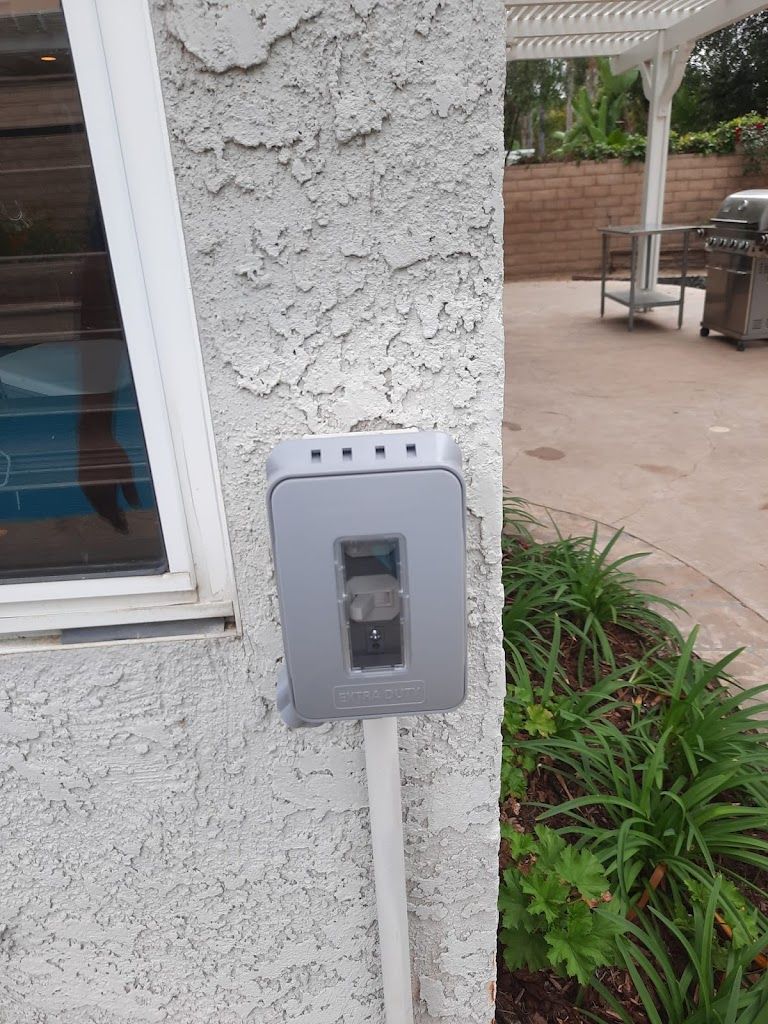
In a California mobilehome park, the park is generally responsible for its own electrical system, including the pedestal at your space, unless the local utility owns that equipment. You're responsible for the connection from that pedestal to your home and for all the wiring inside it, so where the problem sits decides who fixes it.
This guide, for residents and park owners in Los Angeles, Orange and Ventura counties, covers where that line falls and who to call first.
What does state law make the park responsible for?
The park answers for its common areas, its own electrical equipment and the lot service at each space unless the serving utility owns it. Title 25 of the California Code of Regulations, section 1102, puts the park operator in charge of the safe operation and maintenance of common areas and of park-owned electrical, gas and plumbing equipment. Where the serving utility doesn't own them, the park is also responsible for the lot services, and the regulation names the electrical pedestal among them.
Civil Code section 798.15 requires the rental agreement to state that management must provide and maintain the physical improvements in the common facilities in good working order and condition. When something breaks down suddenly, management gets a reasonable time to repair it after it knows or should have known: as soon as possible when health or safety is affected, and otherwise no more than 30 days unless exigent circumstances justify a delay.
What part of the electrical system belongs to the resident?
Your share starts where your home connects at the lot service. The same Title 25 section makes the home's owner responsible for the connections to the utilities at the lot services and for the upkeep of the home, its accessory structures and their utility connections up to that point.
In practice, that usually means the items below. HCD's park inspection booklet lists the power cord and feeder assembly among the items residents should check:
- The power cord or feeder assembly running from the pedestal to the home.
- The home's own panel, breakers, circuits, outlets and fixtures.
- Wiring to a shed, carport or anything you add later, such as an air conditioner circuit.
How do I tell whether the problem is the park's or mine?
How far the problem reaches is the best clue:
- Several homes are dark, or the street lights are out too. That points to the park's system or the utility. Check with neighbors and the park office.
- Only your home is affected, and one breaker in your panel has tripped. That's usually inside the home. Our article on a breaker that keeps tripping explains the common causes and what not to do.
- Lights dim or flicker throughout your home, not in one room. The cause could be your feeder, the pedestal or the park's supply, which is why it needs testing rather than guessing. The whole-house flickering guide covers what that pattern can mean.
- One outlet or one room is dead. That's almost always the home's own wiring.
When it's unclear, report it to the park in writing and have an electrician test your side of the pedestal.
Which signs mean I need help right away?
Some symptoms point to overheating or a failing connection. Get help promptly if you notice:
- A burning or hot-plastic smell from the pedestal, the panel, an outlet or the power cord.
- A pedestal, cord or panel that shows scorching, melting or discoloration, or that you've noticed is unusually warm. Don't touch equipment to check.
- Buzzing, crackling or sparking at any electrical equipment.
- Lights flickering throughout the home along with any of the above.
If you see smoke, fire or a downed line, leave the area and call 911. For a hot or smelling pedestal, keep people away from it, tell the park office at once, and call the utility as well if your park is served directly by one.
What should I never do?
HCD's resident booklet for park maintenance inspections lists the violations it commonly finds on residents' lots, and several are electrical. Avoid these:
- Don't open or work on the pedestal, or remove the cover from your home's panel. Both carry live parts that stay energized even when your breakers are off.
- Don't run an extension cord from a neighbor's home or outlet. HCD's resident guide to park maintenance inspections says extension cords can't be used in place of permanent wiring, and that the lot electrical service equipment must stay accessible at all times, so don't block it with storage or a structure either.
- Don't splice, bury or tape up a damaged power cord, or wire it directly into the pedestal. The same guide says the cord's covering must not be cracked or deteriorated, the cord must not be cut, spliced or buried, and it must not be directly wired to the park electrical service. A damaged cord should be replaced by a licensed electrician.
- Don't connect a generator to your home's wiring through an outlet. Never plug a generator into a wall outlet: it can send power back onto the lines and endanger utility and park crews. Our article on transfer switches and interlocks explains the proper equipment.
If you use a portable generator for appliances during an outage, the U.S. Consumer Product Safety Commission's generator guidance says to run it outdoors, well away from windows, doors and vents, never indoors or in a garage, basement or shed, and to keep a working carbon monoxide alarm in the home.
Do I call the park office, an electrician or the utility?
It depends on how your park gets its power. There are two common arrangements in California.
Master-metered parks. Some parks are still master-metered: the park, not the utility, runs the electric system that serves each lot. The CPUC's program FAQ says the park owner must keep operating and maintaining that master-metered system until any conversion is complete, so outages and pedestal problems go to the park office first.
Directly served parks. Title 25 section 1180 requires parks built after January 1, 1997 to have an individual electric meter for each lot, served by the local electrical corporation's distribution system. Some older parks have also been converted under the CPUC's Mobilehome Park Utility Upgrade Program. In those parks, the utility's outage line is the right first call for a supply problem.
A simple order works for most residents:
- Power out to several homes, or a pedestal problem: the park office, plus the utility if your park is directly served.
- A problem inside your home or in your feeder: a licensed electrician.
- Not sure: the park office first, in writing, then an electrician to test your side.
What is the CPUC's Mobilehome Park Utility Upgrade Program?
It's a CPUC program that replaces older park-owned gas and electric systems with new utility-owned service. In its February 24, 2026 update, the CPUC describes the new systems as owned, operated and maintained by the investor-owned utilities, says the utility installs the new infrastructure up to the meter and in most cases also upgrades the facilities serving individual homes, and states a goal of converting 50 percent of all mobile home spaces by the end of 2030.
The CPUC's program FAQ adds:
- Participation is voluntary; the park owner applies with a Form of Intent during an application window.
- Until the services transfer, the owner must keep operating and maintaining the existing master-metered system.
- Where the park owner is responsible for the work from the new meters to each home, the owner must hire a qualified, licensed contractor, and the utility reimburses reasonable costs.
- Resident-owned items that are damaged, unsafe or not compliant with HCD rules may have to be replaced at the park's or the homeowner's expense.
Who inspects my park, and where do complaints go?
California's Department of Housing and Community Development (HCD) enforces the park health and safety rules in most parks, and a city or county does it in the rest. HCD's Information Bulletin 2022-12 explains that HCD is the designated enforcement agency unless a city or county has been approved to take over, in which case it covers every park in its jurisdiction. HCD's September 2026 task force briefing says HCD keeps enforcement responsibility for about 83 percent of parks statewide, with 52 local agencies active.
To find out which agency covers your park, use HCD's local enforcement agencies page, which links to a park search that shows each park's enforcement agency, or ask your park office. HCD's Mobilehome Assistance Center takes complaints about park health and safety. For disputes under the Mobilehome Residency Law, HCD's protection program FAQ for homeowners says a complaint must come from a mobilehome or manufactured homeowner who lives in the park.
Before filing, keep a record: when you told management, photos taken from a safe distance, and any reply.
Does work on my home need a permit?
Most electrical additions and alterations do; HCD's inspection guide says installing or altering electrical equipment needs a permit from the enforcement agency. Those steps, and any park approval for work at the lot, are coordinated as part of the job.
How Infinity Electrical helps residents and park owners
Infinity Electrical Inc. (CSLB #1100231) does electrical work in mobilehome parks across Los Angeles, Orange and Ventura counties. For residents, that includes troubleshooting, added circuits, panel work and repairs to the feeder between the pedestal and the home. For park owners, it includes electrical repairs in the park, such as lot service equipment and lighting.
Before any job starts, we confirm which agency inspects the park and which side of the pedestal the work is on, so the right party approves it. Our mobilehome electrical page has more detail, and the pre-shutoff checklist helps with outage season.
FAQ
Who fixes the pedestal at my space?
The park, unless your utility owns it. Title 25 makes the park responsible for the electrical pedestal where the serving utility doesn't own it, so report problems to management in writing.
Is the power cord to my home the park's responsibility?
No, it's normally yours, along with everything from the lot service into the home.
My whole park lost power. Who do I call?
Call the park office first, and the utility too if your park is directly served. In a master-metered park, the park's own system serves your lot, so the park office is the main call.
Talk to an electrician
Tell us your park's name and what you're seeing, and send photos taken from a safe distance with the estimate form, or call (844) 430-7681. Free estimates on eligible work.