Los Angeles County · a neighborhood of the City of Los Angeles
Electrician in San Pedro
Infinity Electrical is a licensed electrical contractor for San Pedro, the harbor community at the southern end of the City of Los Angeles, beside the Port of Los Angeles. We upgrade panels, rewire older houses, trace faults, add EV charger circuits and wire shops and industrial units on LADBS permits and LADWP power, and we check where the Rancho Palos Verdes city line puts an address under different rules.
Small repairs welcome · Free estimates on eligible work · Licensed C-10 #1100231Call (844) 430-7681
What we do in San Pedro
Everything we do in San Pedro, with what each job usually involves here. The photos are from our own jobs.
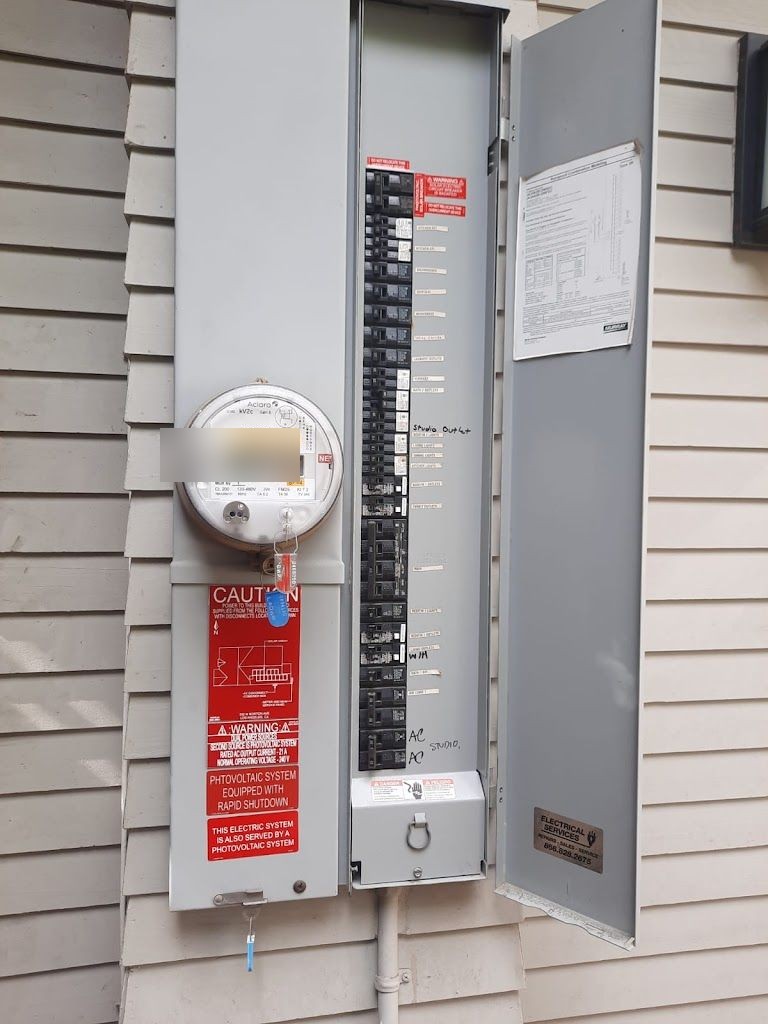
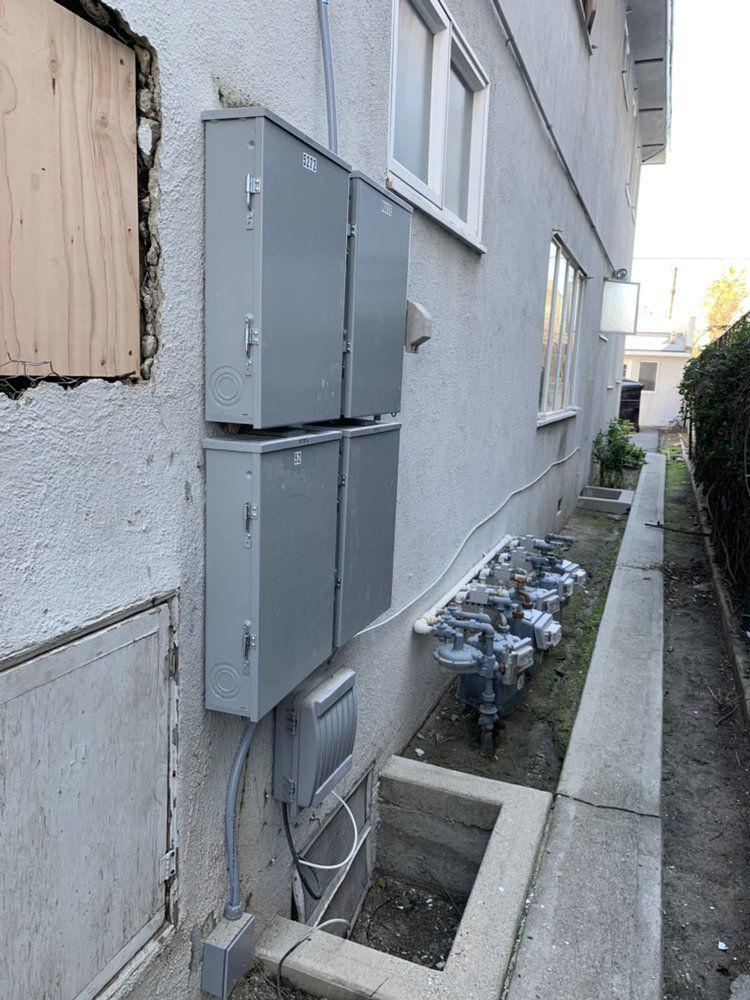
Panel upgrade with a new LADWP meter, labeled circuits and solar disconnect labeling
Panel upgrades in San Pedro
Service upgrades for 1960s and 1970s hillside houses and for older homes near Downtown, with the LADWP meter spot coordinated and, inside Vinegar Hill, the location checked against the HPOZ before work begins. Background reading: does a heat pump or induction range need a bigger panel?
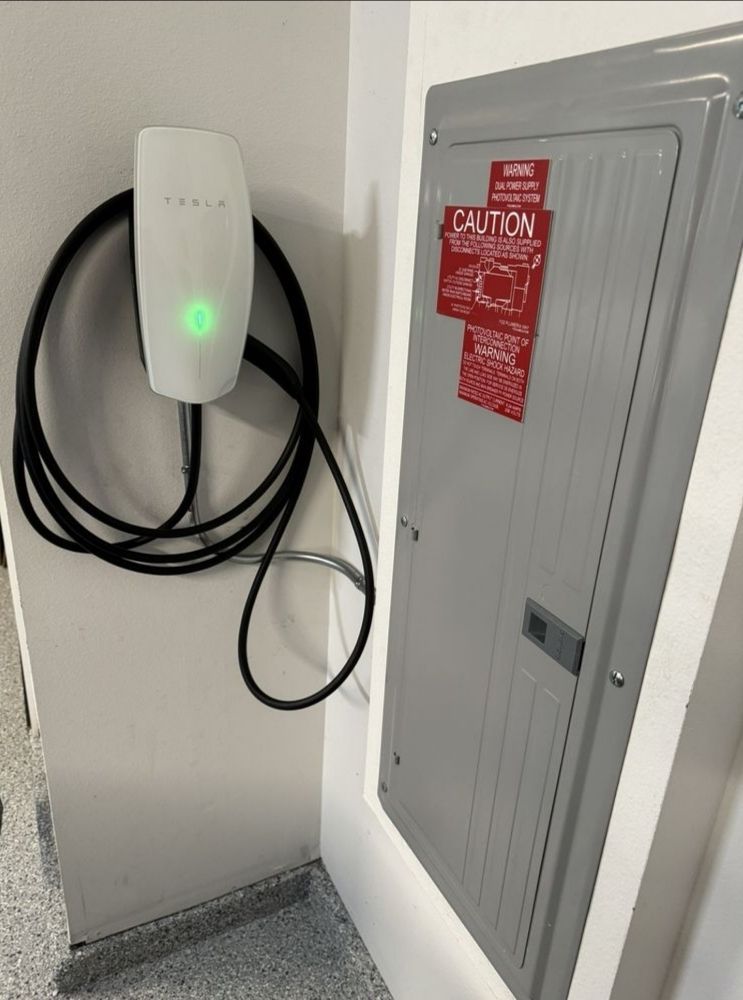
EV charger on a dedicated circuit next to the main panel
EV charger installation in San Pedro
Level 2 charger circuits for driveways and garages, which on a hillside lot means planning the route from the panel first, and for condo owners and renters, agreed with the HOA or owner before any equipment is bought.
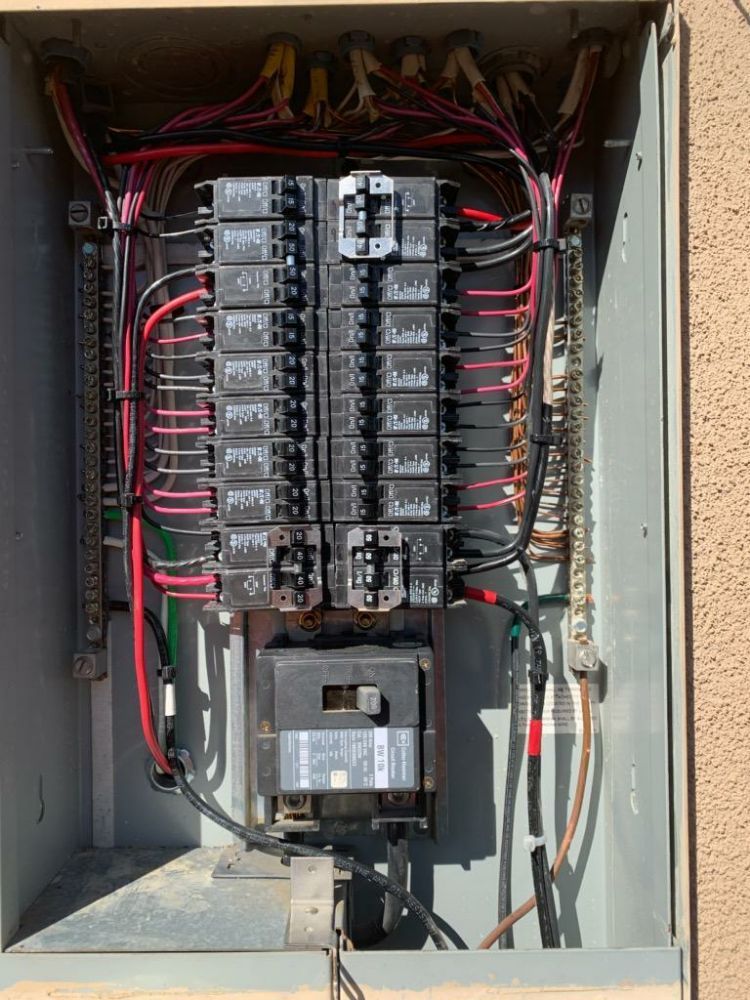
Inside a main panel: breakers, feeders and labeled circuits
Electrical repair & troubleshooting in San Pedro
Finding the cause of tripping breakers, dead outlets and flickering lights in houses that have been rewired piece by piece, and in apartment buildings where several units share aging equipment.
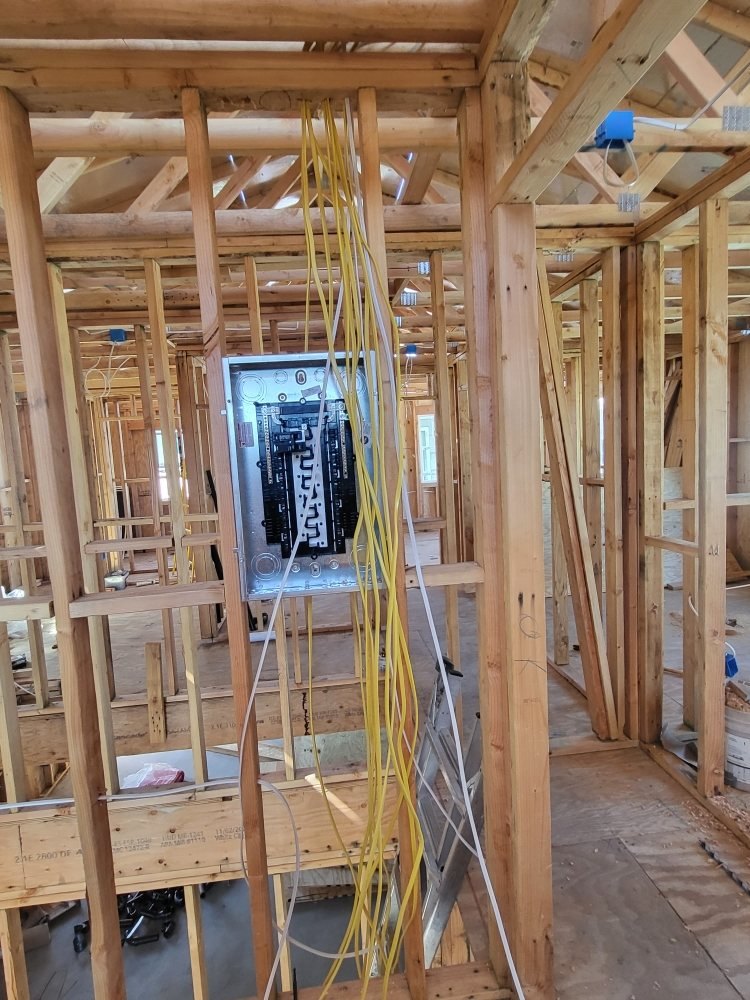
New construction rough-in: panel set and circuits run before drywall
Rewiring in San Pedro
Section-by-section rewiring of Vinegar Hill and Point Fermin houses so owners can stay in the home, with interior routes chosen to leave a historic exterior as the preservation plan expects.
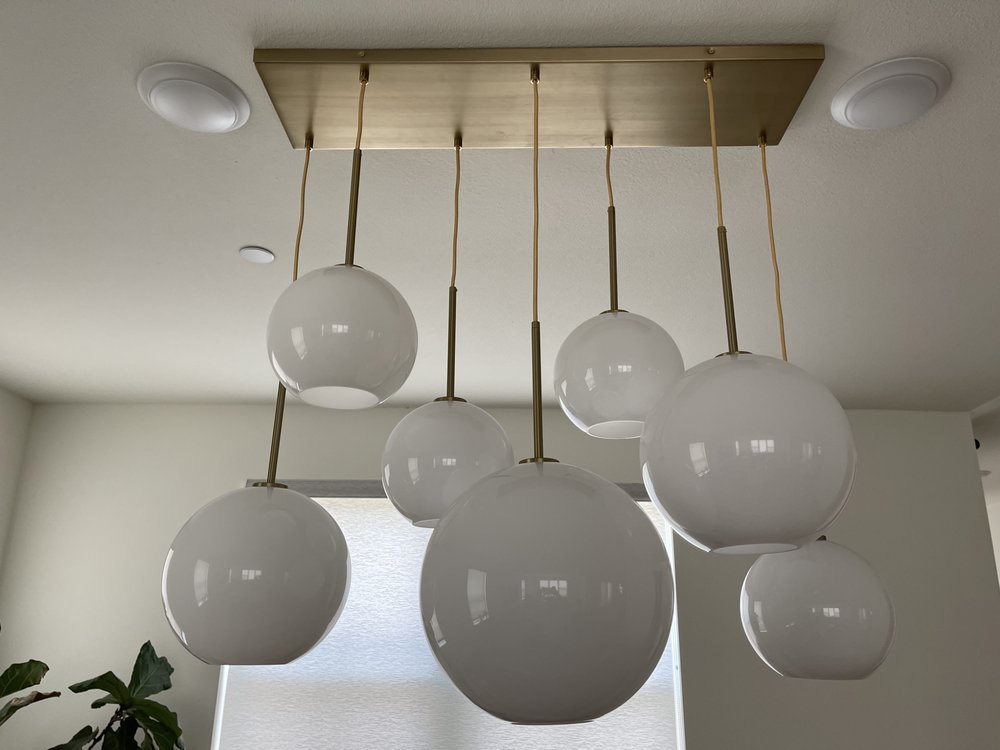
Seven-globe cluster pendant on a brass canopy with recessed lights
Lighting & ceiling fans in San Pedro
Fixture and ceiling fan work in older homes, exterior and step lighting for sloping lots, and shop and sign lighting for businesses Downtown and along Gaffey Street and Pacific Avenue.
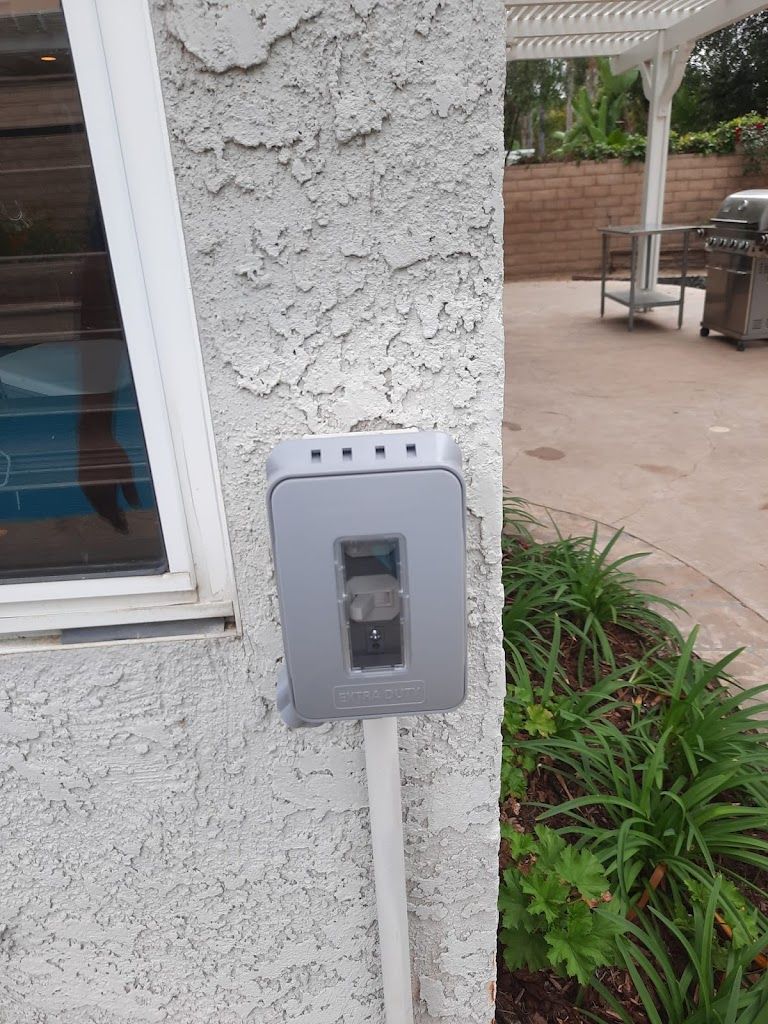
Outdoor GFCI outlet with an extra-duty weatherproof cover
Outlets, GFCI & new circuits in San Pedro
GFCI protection for kitchens, baths and outdoor outlets on decks and patios, grounded outlets where two-prong receptacles remain, and dedicated circuits for laundry and air conditioning in older bungalows.
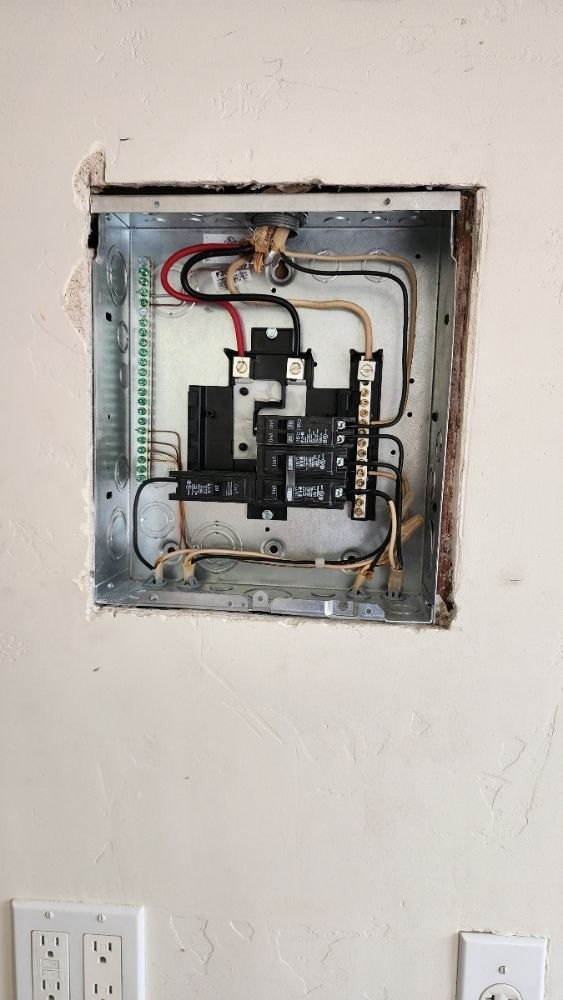
Flush-mounted sub-panel opened for inspection, older wiring
Mobilehome electrical in San Pedro
Circuits, repairs and panel or pedestal work for residents and management at San Pedro's senior mobile home park, with the inspecting agency confirmed under state park rules first.
Three-phase feeders, machine circuits, panel work and LED lighting for workshops and light industrial units in the North Gaffey Street area, and tenant improvements for storefronts and restaurants Downtown.
Also: subpanels, dedicated circuits, 240-volt outlets for dryers and ranges, exterior and security lighting, hard-wired smoke alarms, and small repairs of every kind.
Need an electrician in San Pedro? Call now, or send the form and we'll call you back to set a time for an on-site estimate.
Infinity Electrical Inc. (CSLB #1100231) offers electrical work for houses, condominiums, apartment buildings, storefronts and industrial spaces in San Pedro. The community sits on the Palos Verdes Peninsula near the end of the Harbor Freeway, and City Planning's community plan notes that it is joined to the rest of Los Angeles only by the Harbor Gateway, a narrow strip of city land. It feels far from City Hall, yet for every electrical permit and every meter it is as much a part of the city as Hollywood or Van Nuys.
San Pedro incorporated as its own town in 1888 and was annexed by the City of Los Angeles in 1909, which tied its future to the harbor next door. The 2017 community plan builds on that closeness to the port and the water while aiming to keep what it calls the community's small town feel.
The housing grew outward and uphill from the waterfront. The oldest neighborhoods lie near the harbor in the center of town, on grid streets where single-family houses and apartments share the same blocks; post-war tracts of modern and ranch-style homes came next, the northwest filled in mostly between 1960 and 1980, and condominiums followed in the late 1980s and early 1990s. As a result, the electrical service on a San Pedro property might be a Victorian-era cottage that has been rewired in pieces, a 1970s hillside house sized for the appliances of its day, or a condo panel that shares a meter room with dozens of neighbours.
A neighborhood of the City of Los Angeles, Los Angeles County
Areas we cover in San Pedro
Vinegar Hill
Downtown San Pedro
Point Fermin
The Palisades
Vista del Oro
Rancho San Pedro
Gaffey Street and Pacific Avenue
North Gaffey industrial area
Good to know
Part of the City of Los Angeles since 1909: LADBS permits and LADWP power
Rancho Palos Verdes, next door to the west, is a separate city with its own permits and SCE power
Vinegar Hill HPOZ: adopted 2001, expanded 2015, houses built 1886 to 1927
About three in four housing units were built before 1980 (City Planning, 2018–2022 ACS estimates)
La Rambla, in the middle of town, is unincorporated county land
4.9★ from 232 Google reviews across our service area · Licensed C-10 #1100231 · Free estimates on eligible work
What's common in San Pedro homes
City Planning's 2018–2022 estimates count about 32,900 housing units in the San Pedro community plan area, 55% of them in buildings with more than one unit, and renters in about 56% of occupied homes. Close to one unit in five dates from 1939 or earlier, about three in four were built before 1980, and only around 6% are from 2000 or later.
Vinegar Hill and the old blocks near the harbor. The community plan identifies Vinegar Hill as holding a significant concentration of historic structures, and the grid streets around Downtown are the oldest housing in San Pedro. Houses from the 1880s to the 1920s have usually been rewired more than once, often by different hands. Before recommending rewiring, the panel and several outlet and junction boxes are opened so that the proposal is based on what is in the house, not on its age alone.
Point Fermin bungalows. The plan describes Point Fermin as reflecting a beach influence in its California Craftsman and bungalow architecture. Older bungalows of this kind commonly run kitchens, laundry and added bedrooms from a service that was sized for far less, which is where outlet, circuit and panel questions usually start.
Post-war ranch houses and the northwest hills. Tracts of modern and ranch-style houses followed the Second World War, and the northwest of San Pedro was largely built between 1960 and 1980. About a third of the community's housing comes from the 1960s and 1970s alone, so many owners are now adding chargers, heat pumps or induction cooking to panels from that era, and a load calculation shows whether the service can take it.
Condominiums. Condominium complexes from the late 1980s and early 1990s added a newer layer of housing.
Apartments in the central and eastern blocks. The plan puts most multi-family housing in the central and eastern parts of San Pedro, and with more than half of households renting, a good deal of the work is arranged by owners and managers: unit panels, kitchen and laundry circuits, smoke alarm wiring and repairs in occupied buildings, planned so tenants lose power as briefly as possible.
A senior mobile home park. The community plan records one mobile home park, a gated senior community in the southwest corner of San Pedro. Electrical work for residents or the park follows the state's mobilehome rules, and which agency inspects it is confirmed before work starts.
Downtown, the corridors and North Gaffey. Commercial land is concentrated Downtown and along Gaffey Street and Pacific Avenue, with larger centers on Gaffey and Western Avenue. Industrial land makes up about 7% of the community, mainly in the north around North Gaffey Street, an area the plan calls an important economic and employment district and keeps zoned for industry. Workshops and light industrial tenants there may need three-phase power or new feeders when equipment changes.
Permits and power in San Pedro
San Pedro (ZIP codes 90731 and 90732; 90733 is used for post office boxes) lies inside the City of Los Angeles, so the citywide LADBS and LADWP steps below apply to almost every address here. Two edges deserve a look before a job is written up: the western city line with Rancho Palos Verdes, and a pocket of unincorporated county land in the middle of town.
The Rancho Palos Verdes line. City Planning places San Pedro directly east of Rancho Palos Verdes, a separate incorporated city, and crossing that line changes both the permit office and the utility. Rancho Palos Verdes runs its own Building and Safety Division, which lists electrical items among its over-the-counter permits and takes MEP permits through its eTrakit portal, and Southern California Edison supplies its power. A panel upgrade on the San Pedro side therefore goes to LADBS and LADWP, while the same job just across the line goes to the RPV counter and SCE. The electric bill is a good first clue: LADWP usually points to San Pedro's rules, SCE to a neighbouring city's. The SCE disconnections in the landslide area that made news in 2024 were in Rancho Palos Verdes, and our Rancho Palos Verdes page explains that side.
La Rambla. According to the community plan, an area of unincorporated Los Angeles County land known as La Rambla sits in the middle of San Pedro, and its land uses follow the County General Plan rather than the city's; the plan places Little Company of Mary Hospital on 7th Street inside it. An address there can read San Pedro on the envelope while falling outside the city, so the permit office is confirmed from the parcel before anything is priced.
Vinegar Hill HPOZ. Vinegar Hill, an early suburb just south of Downtown San Pedro, became a Historic Preservation Overlay Zone in 2001 and was expanded in 2015. City Planning describes tree-lined streets of modest single-family houses built from 1886 to 1927: Queen Anne, American Foursquare and Craftsman designs, with later Colonial Revival and Spanish Colonial Revival homes. After the expansion, the Planning Commission described the merged district as generally bounded by 8th Street, Harbor Boulevard, 12th Street and Pacific Avenue. Exterior projects inside it are reviewed against the Vinegar Hill Preservation Plan, which follows the Secretary of the Interior's Standards for Rehabilitation. City Planning's HPOZ review is aimed at exterior work, so new wiring inside the walls is generally outside it, but a relocated meter, a new service mast or a charger on a street-facing wall should go past the district's HPOZ staff at City Planning before the LADWP meter location is settled, and we raise that at the estimate.
Hillside and bluff-top lots. The community plan limits development on hillsides to what the terrain and infrastructure can reasonably support, and the coastline has a long record of moving ground: Sunken City at Point Fermin began sliding toward the sea in 1929, and a 2011 landslide destroyed a section of Paseo del Mar beside the White Point Nature Preserve. On a sloping lot the practical questions are where the meter can sit and how a feeder reaches a garage below the house; we look at both on the first visit, and LADWP's meter spot settles where new service equipment may go.
Permits come from the Los Angeles Department of Building and Safety (LADBS). A new circuit, an EV charger, a sub-panel or a panel replacement is permitted work, and LADBS will not send an inspector until the permit is issued. We pull it under our license and meet the inspector at the end.
Power comes from the Los Angeles Department of Water and Power (LADWP), not Southern California Edison. For repairs, lighting, new outlets and a charger that fits on the existing panel, LADWP is not involved. For a panel or service upgrade it is: the job starts with LADWP's free meter spot, where an Electric Service Representative visits within five to fifteen business days, confirms where the new equipment may go and leaves a sketch at the job (single-family services up to 320 amps can be requested online). When only the meter needs setting, LADWP says that generally happens within ten working days. If the existing LADWP service can carry the new load there are generally no LADWP charges; work in the street, on a transformer or on the lines can add cost and time, and we find that out before you commit.
Wilmington and Harbor City, to the north, are City of Los Angeles communities, so LADBS permits and LADWP power carry over unchanged; Terminal Island, across the Main Channel, is split between the cities of Los Angeles and Long Beach and is almost entirely port land, so the jurisdiction there is checked site by site. To the west, Rancho Palos Verdes is a separate city: it issues its own permits through its Building and Safety Division and is SCE territory. Long Beach, which shares the harbor, has its own building department and gets its electricity from SCE. Nearby Lomita now provides its own building and safety services after LA County stopped doing so, and Torrance, farther north, runs its own Building and Safety Division; both are on SCE.
See the full list of areas we cover across Los Angeles, Orange and Ventura counties.
From our jobs
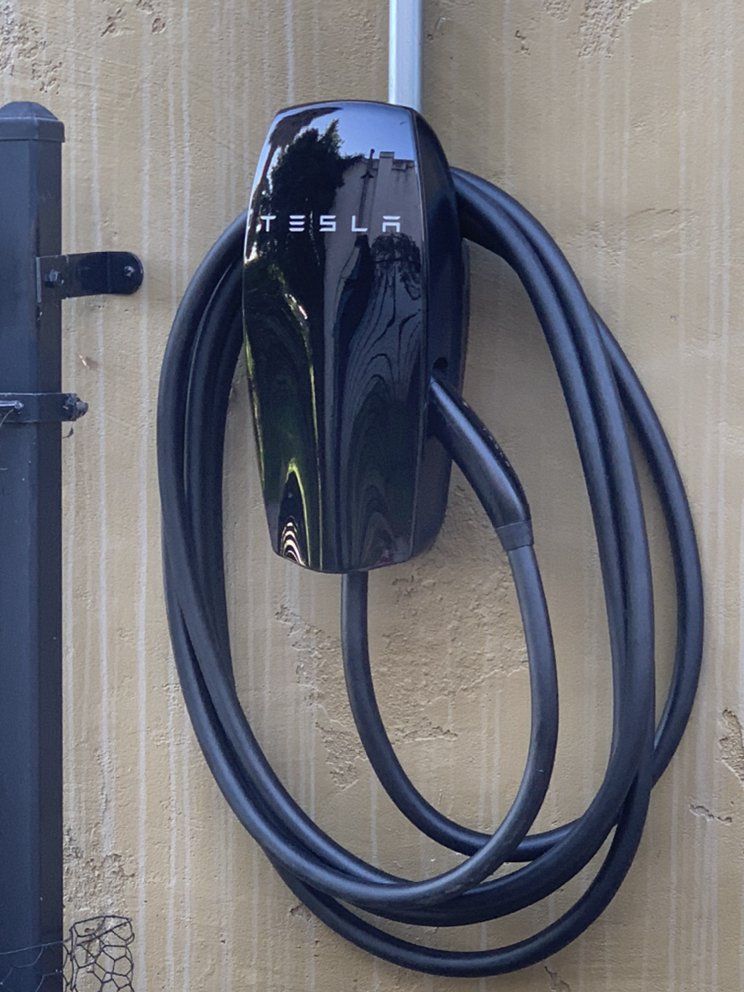
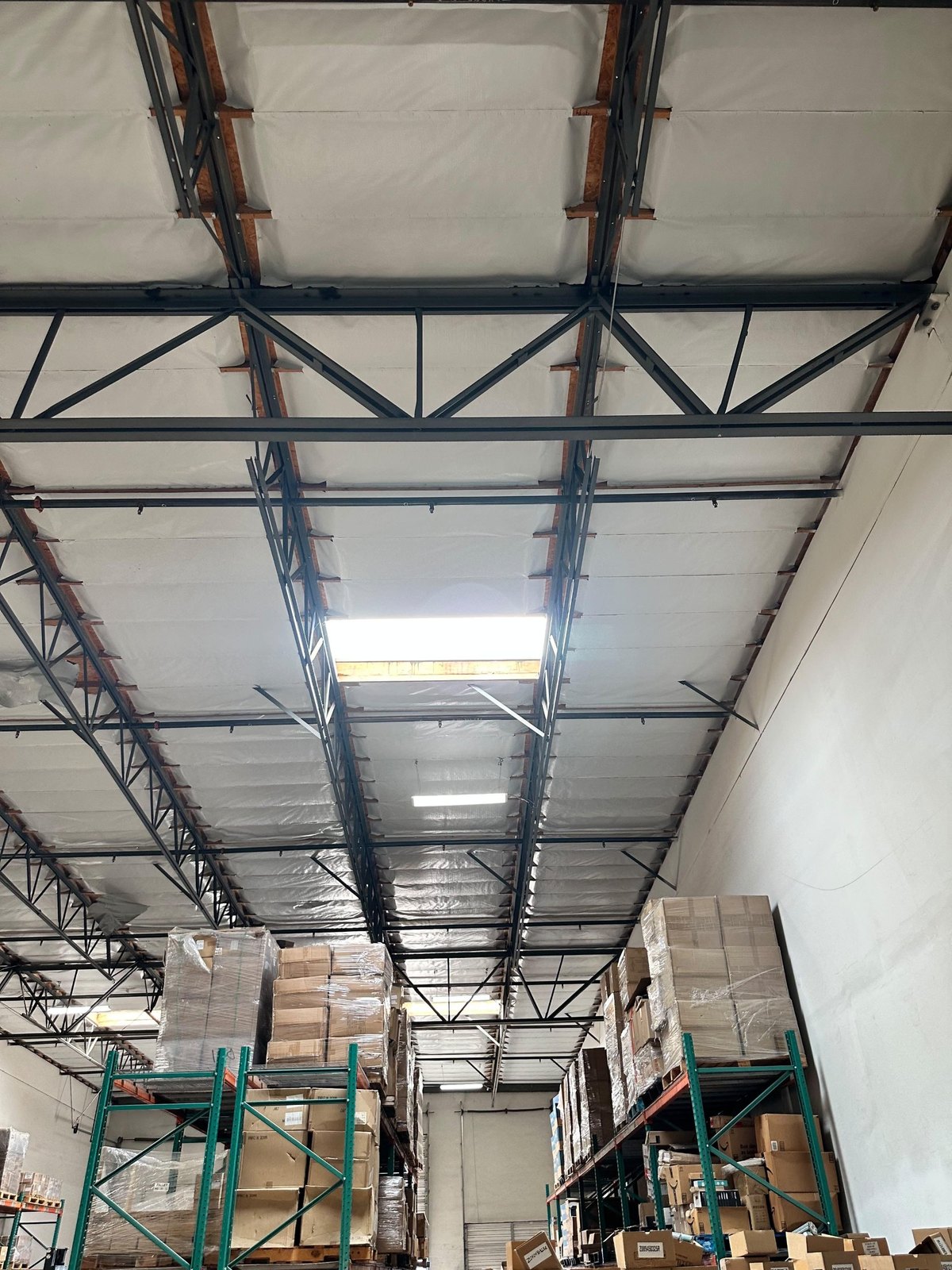
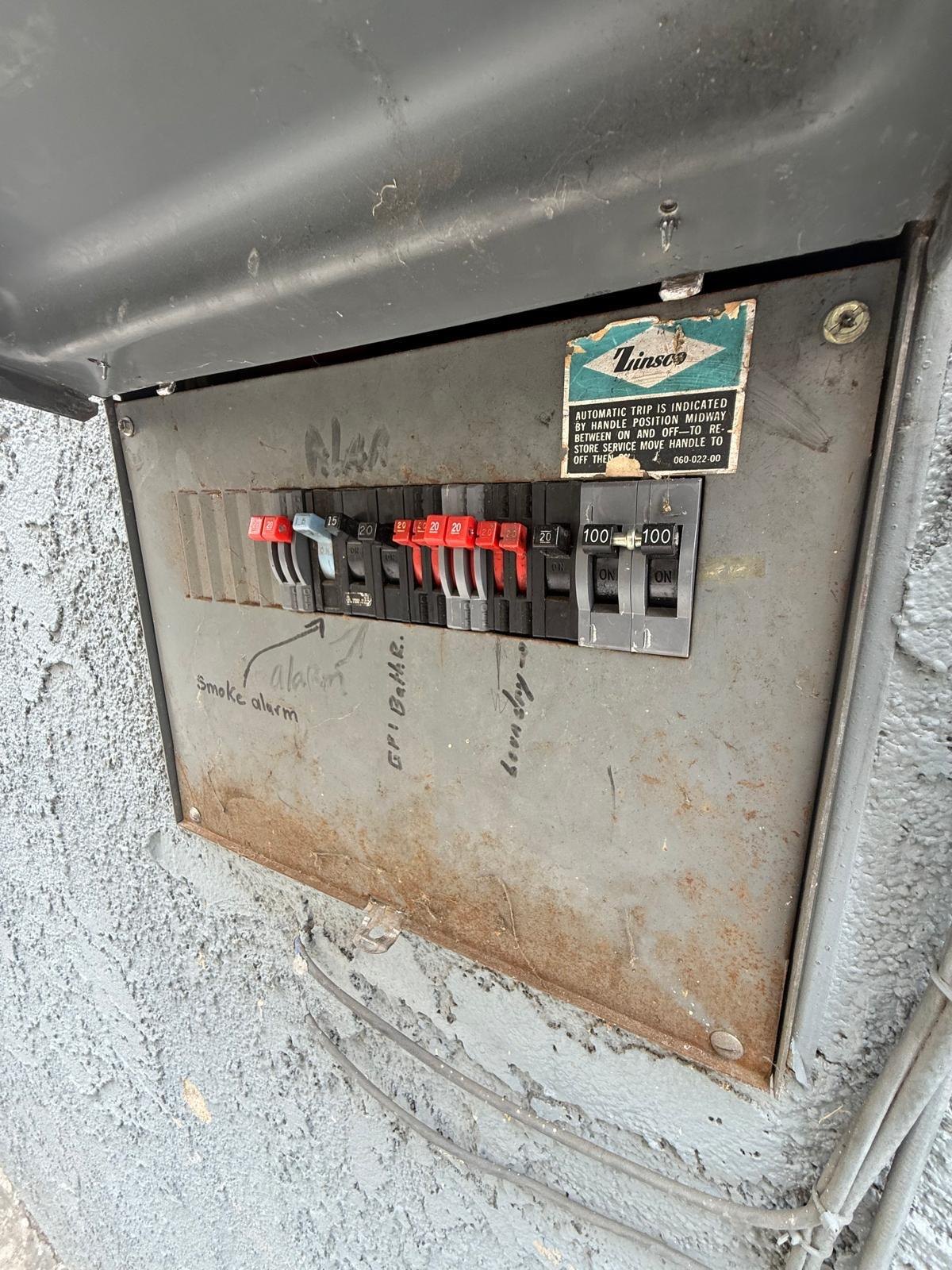
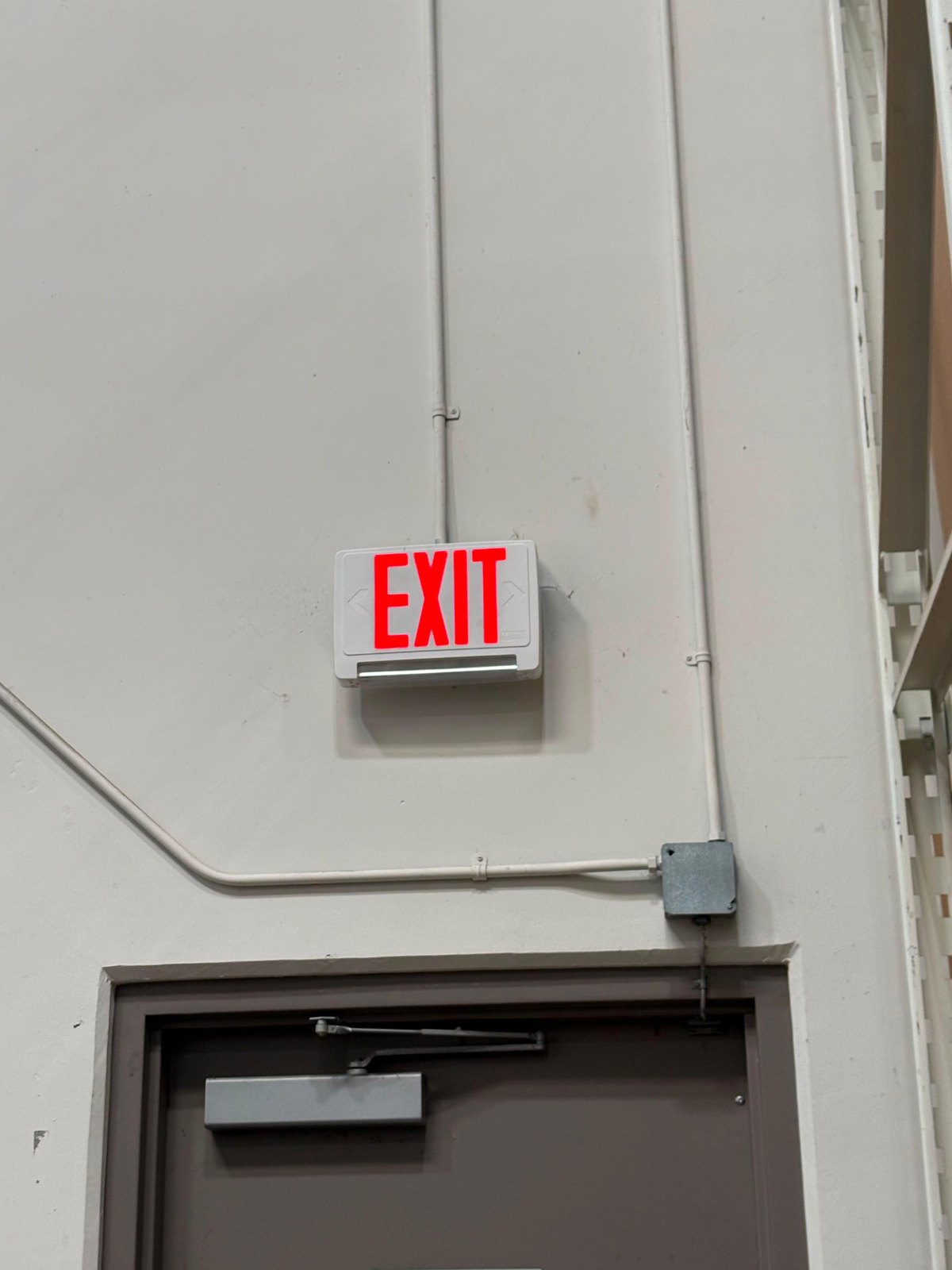
Tesla Wall Connector, exterior wall installWarehouse LED lighting over the racking aislesOriginal Zinsco panel with a rusted cover and hand-written labelsLED exit sign wired in surface conduit above a warehouse door
No phone quotes and no guessing. A written estimate after we've seen the job, then permitted, inspected work.
STEP 01
Reach out
Call or send the form. A photo of the panel or the problem helps us come prepared.
STEP 02
On-site visit
We come to your home or business and look at the panel, wiring or site.
STEP 03
Written estimate
Scope, price and timeline in writing before you decide anything.
STEP 04
Permitted, inspected work
We pull the permit, coordinate your utility when needed, and finish with the inspection.
Questions people ask
Is my address in San Pedro or in Rancho Palos Verdes?
The city line decides it, and your electric bill is a good first clue: an LADWP bill usually means you are in San Pedro, inside the City of Los Angeles, while an SCE bill points to Rancho Palos Verdes or another neighbouring city. The answer changes who issues the permit, LADBS or RPV's Building and Safety Division, and which utility sets the meter. We confirm the jurisdiction from the parcel before quoting a job near the line.
Does San Pedro get its power from LADWP or Southern California Edison?
San Pedro is served by LADWP, because it has been part of the City of Los Angeles since 1909, and LADBS issues its permits. Wilmington and Harbor City, also City of Los Angeles communities, are the same. Rancho Palos Verdes, Lomita, Torrance and Long Beach are separate cities on SCE power, so the rules change once you cross into them.
Our house is in Vinegar Hill. Does moving the meter need historic approval?
It may, because exterior projects in the Vinegar Hill HPOZ are reviewed against the district's preservation plan, and a meter or service mast on the outside of the house is an exterior change. City Planning's HPOZ review covers exterior work, so rewiring or replacing an indoor panel in place is generally outside it. Talk to the HPOZ staff at City Planning before the new meter location is agreed with LADWP; we flag this when we look at the job.
We have a 1970s house on a hillside lot and want a charger and a heat pump. Will the panel cope?
It depends on a load calculation, not on the age of the house alone: some panels from that era have spare room, and others need a service upgrade first. On a sloping San Pedro lot, the distance from the panel to the parking or to the outdoor unit also matters, since a long run can call for heavier wire or a sub-panel. Our guide to adding a charger to a 100-amp panel explains the calculation, and see also EV charger installation.
I own a condo in San Pedro. Can I add an EV charger at my parking space?
Often, but the HOA comes first, because the circuit usually runs from equipment or through areas the association controls. The useful starting facts are where your unit's meter and panel are, how far your space is from them and what the association's rules say. We can look at the route and the panel with the HOA's manager, and our article on EV charger permits in Los Angeles covers the LADBS side.
Our workshop in the North Gaffey industrial area needs three-phase power for new machines. Where do we start?
Start with a list of the machines and their nameplate ratings, then find out what service the building already has, since a building may already have three-phase service or may need LADWP to bring it in. An electrician can compare the two and tell you whether new feeders are enough or the service must change. Read leasing a shop that needs three-phase power before signing a lease.
The lights flicker across our whole house near the waterfront. Is that something to worry about?
Flickering in every room deserves a check by a licensed electrician, because it can point to a loose connection in the service or the panel rather than a single bad bulb or fixture. Some causes sit on LADWP's side of the meter and some on yours, and an older house that has been rewired in stages has more connections where that can happen. Please don't open the panel yourself; our article on whole-house flickering lists what to note before the visit.
Ready when you are.
Call now, or send the form and we'll call you back to schedule an on-site estimate.